
Last updated November 25, 2026
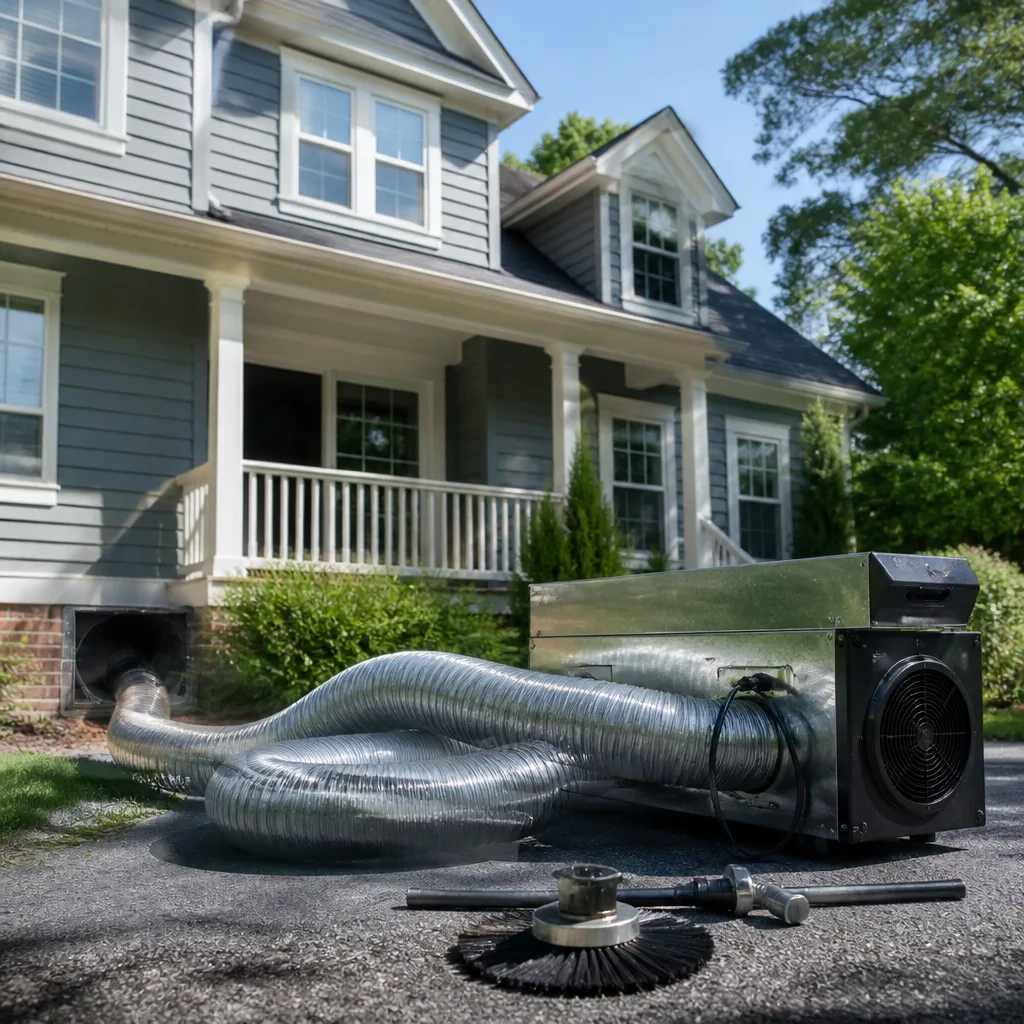 Whole-home duct cleaning
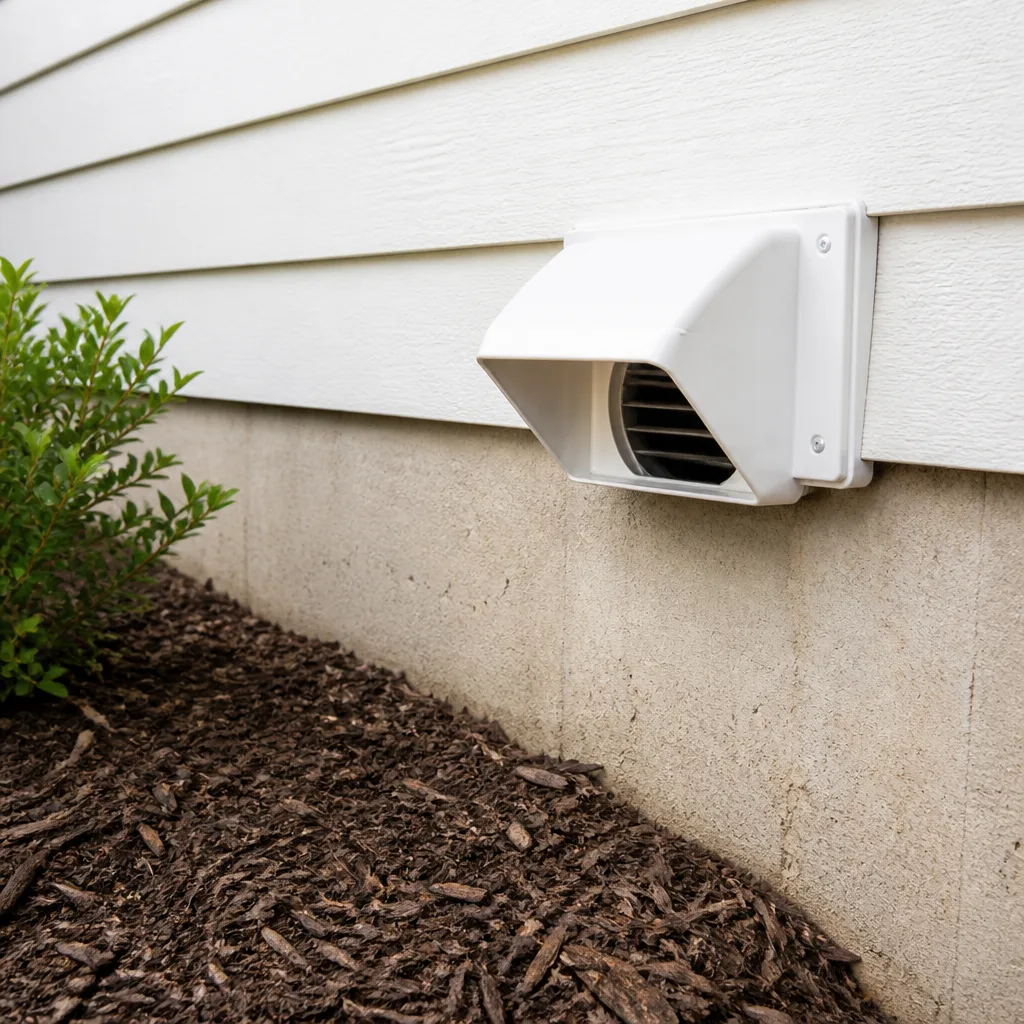 Dryer vent cleaning
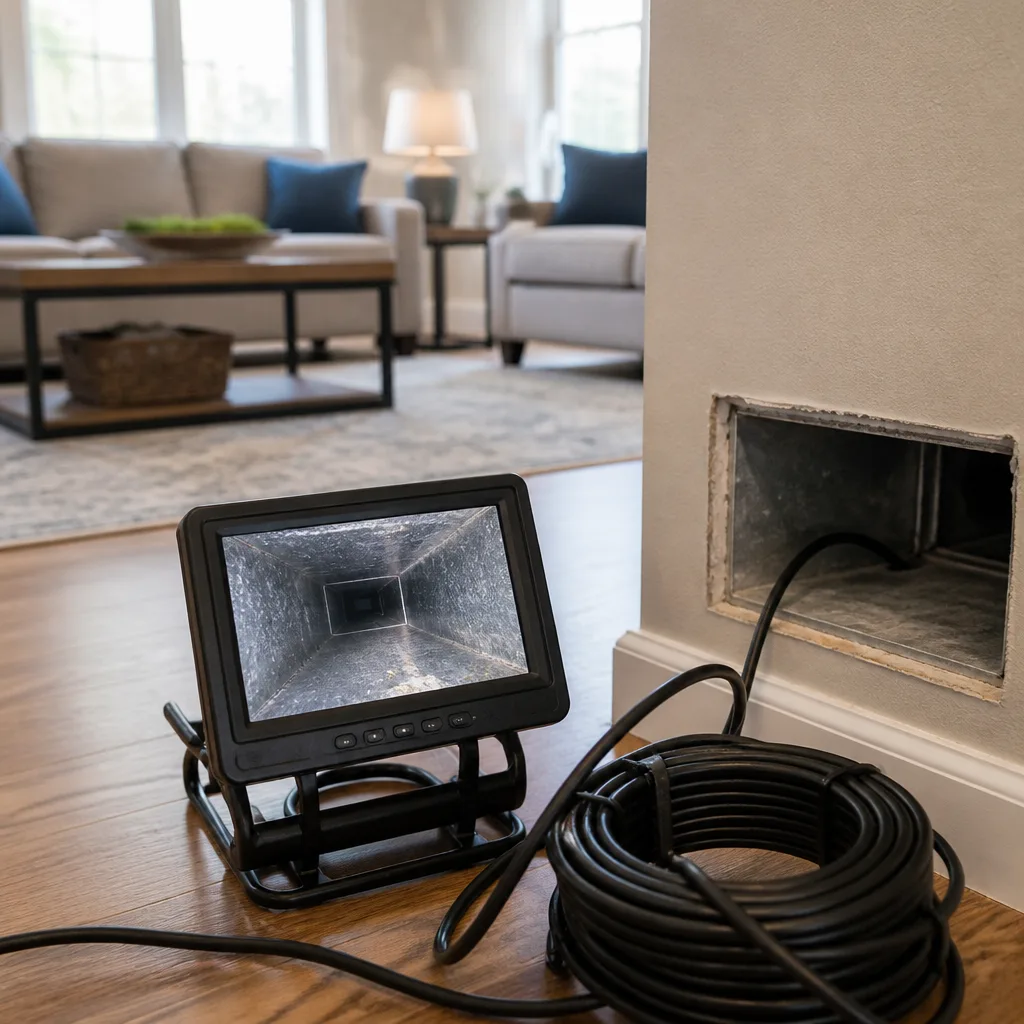 Camera inspection
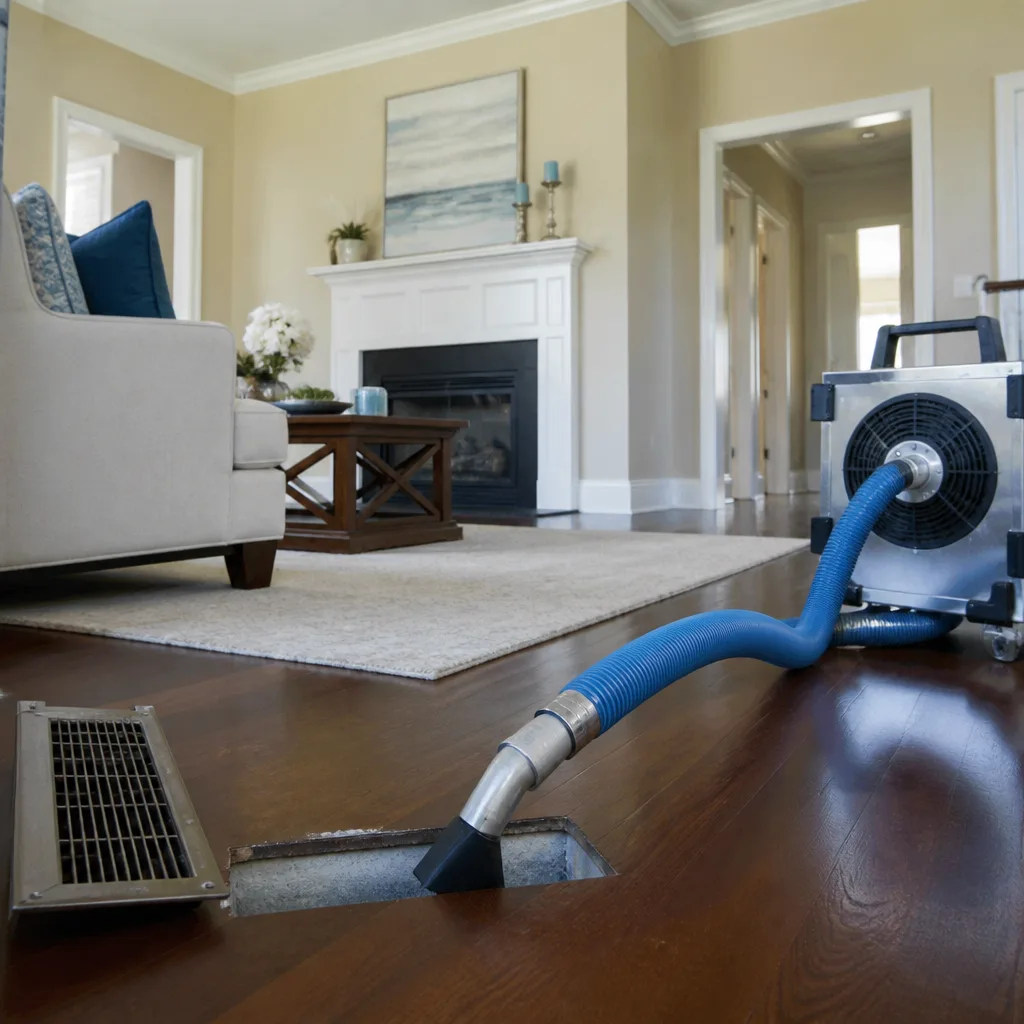 Sanitizing & deodorizing
Whole-system duct and dryer vent check with before-and-after photos - you see exactly what came out of your vents
That "$99 whole-house special" is a bait ad - the real number appears once they are in your hallway, or the "clean" is a shop-vac at the register. We photograph the inside of your ducts before and after instead.
Air Duct Cleaning Warning Signs: A Midtown Homeowner’s Reference Guide
Visible dust puffing out of a supply register is a late-stage indicator. By the time you can see it, the duct lining, the coil face, and the blower wheel have usually been collecting contamination long enough to change how the whole system behaves. The signals that matter most arrive earlier, and they show up in places most homeowners never think to look: how quickly a filter loads, how long the system runs to hit a setpoint, which rooms heat or cool unevenly, and what the air smells like at different times of the year. This guide teaches you to read those system-level signals, the ones that tell you what’s happening inside the trunk lines in a Midtown home, well before a register ever lets you see it.
Quick Answer
The main warning signs that your ducts need professional cleaning are uneven airflow between rooms, filters that load up in weeks instead of months, rising HVAC runtime, musty or chemical odors that change with the season, and visible debris or dust streaks at the registers and grilles. In Midtown, where homes mix older ductwork with newer high-efficiency systems and plenty of renovation dust, these signals often show up together. Any two of them appearing at once is a reasonable trigger for a professional inspection rather than another filter change.
Styles & brands we work with
- Whole-home duct cleaning
- Dryer vent cleaning
- Camera inspection
- Sanitizing & deodorizing
Table of Contents
- Airflow Asymmetry: When One Room Won’t Keep Up
- Filter Loading Rates: What’s Normal and What Isn’t
- Odor Diagnostics: Musty, Burning, and Chemical Smells
- HVAC Runtime as an Efficiency Metric
- Post-Renovation Particulate Infiltration
- The Visible Signs: Registers, Grilles, and Return Plenums
- What a Professional Duct Inspection Actually Covers
- Duct Repair and Sealing: Fixing What Cleaning Exposes
Airflow Asymmetry: When One Room Won’t Keep Up
If one bedroom stays hot in summer while the rest of the house is fine, the instinct is to blame the thermostat. Most of the time it isn’t the thermostat. Airflow asymmetry, a consistent gap between how different rooms heat or cool, usually points to something physical in the duct path: a partially blocked branch run, a disconnected flex joint behind a wall, a crushed section where ductwork was stepped on or kinked during an earlier remodel, or debris settled in a low spot of the trunk line.
A thermostat reads one location and calls for heat or cooling based on that single sensor. It can’t compensate for a branch run that’s delivering a fraction of the air it should. That’s why the symptom looks like a heating and cooling problem but is often a duct problem. Midtown has a mix of housing stock, from older bungalows with original sheet metal to newer infill construction with flex duct routed through tight chases, and each layout produces its own pattern of asymmetry.
To narrow this down before you call anyone:
- Hold a tissue or a strip of thin paper against each supply register with the system running. Compare how far it flutters across rooms.
- Note which rooms are consistently weak, not just occasionally. Consistency points to a physical restriction.
- Check whether the weak room’s register is fully open and unobstructed by furniture or rugs.
- Listen at the weak register for a whistling or rushing sound, which can indicate a restriction upstream rather than a lack of air.
If the same rooms stay weak across seasons, that’s a strong signal of a partial blockage or a duct leak rather than a thermostat issue. Cleaning addresses contamination, and our air duct cleaning service is the starting point for most of these systems, but when the underlying cause is damaged or disconnected ductwork, we move into repair rather than simply vacuuming around it.
Filter Loading Rates: What’s Normal and What Isn’t
Your filter’s loading rate is one of the most honest diagnostics a homeowner has, because it reflects everything happening upstream of the filter element. A filter that needs changing every three months is behaving normally. A filter that goes gray in three weeks is telling you something is feeding it.
- Normal loading: gradual, even graying across the filter face over the manufacturer’s recommended interval.
- Accelerated loading: visible dust within weeks, or a filter that feels heavy and matted before the interval is up.
- Uneven loading: one half of the filter much darker than the other, which often points to a return path that’s pulling air from a contaminated area.
When a filter loads fast, the most common cause is contamination sitting in the air handler or on the evaporator coil, both of which are downstream of the filter but can recirculate particles back into the return. A dirty blower wheel throws dust, and a coil with a matted face sheds material that finds its way back to the filter. Either way, changing the filter more often treats the symptom. The loading rate itself is the signal that the air handler and coil face need to be inspected. That’s why our HVAC cleaning work goes past the ducts to the unit itself, since a clean duct system attached to a dirty coil won’t deliver the result you paid for.
In Midtown, where many runs of ductwork are short and systems sit in tight closets, a fast-loading filter is worth investigating early. Tight mechanical spaces tend to concentrate whatever is coming off the coil and blower.
Odor Diagnostics: Musty, Burning, and Chemical Smells
Smell is the most underrated duct diagnostic. Most homeowners register an odor and move on. Read correctly, the type, timing, and season of a smell tell you a great deal about what’s happening inside the system.
Musty odors
A musty, damp-earth smell that strengthens when the system first starts is the classic signature of microbial growth. It typically points to condensation or moisture sitting on the coil, in a drain pan, or in duct lining that stays cool and humid. In Midtown’s humid summers, a system that short-cycles can leave the coil wet between cycles, and that moisture is what feeds the smell. Musty odors deserve prompt attention.
Burning or hot-dust odors
A brief dusty smell at the first heating cycle of the season is normal. A smell that persists, or that returns every time the heat runs, is different. It can indicate dust baking onto a heat exchanger, and it’s a reason to have the system inspected rather than ignored, because a heat exchanger is also a safety component and shouldn’t be diagnosed by guesswork. If a burning smell comes with any concern about a gas appliance, shut the system down and have a qualified technician look at it before running it again.
Chemical or solvent odors
New paint, adhesives, flooring, and cabinetry off-gas volatile organic compounds, and those compounds get drawn into the return and distributed. A chemical smell that appears only after a renovation, or only in certain rooms, is worth tracing through the duct system. Air quality sanitizing can help with residual odors, but the first step is understanding the source, not masking it.
HVAC Runtime as an Efficiency Metric
Runtime is how long the system runs to reach and hold a setpoint. When runtime climbs, the usual assumption is a refrigerant problem. Coil contamination and duct leakage cause the same symptom, and they’re far more common than a refrigerant fault in a system that otherwise seems healthy.
Here’s the reasoning. A dirty evaporator coil can’t transfer heat the way it was designed to, so the system runs longer to move the same amount of heat. Duct leakage in a supply run loses conditioned air before it reaches the room, so the system runs longer to satisfy the thermostat. Both show up as rising runtime and a home that never quite feels settled.
A simple way to track it is to note how long the system runs during a typical heating or cooling cycle and compare that across seasons. If runtime is creeping up and filters are clean and loading normally, the next place to look is the coil face and the duct system, not the refrigerant charge. A full-system indoor air quality assessment is a sensible next step when runtime, filter loading, and uneven rooms all point in the same direction.
Post-Renovation Particulate Infiltration
Renovation dust is not the same as everyday dust. Drywall dust is fine, abrasive, and travels deep into a system. It settles in the return plenum, coats the blower wheel, and works into the coil fins. Construction debris, from sawdust to drywall chunks to insulation fibers, can end up in branch runs where it restricts airflow long after the contractor has packed up.
A filter change after a renovation is a good start but rarely enough on its own. The filter catches what passes through it; it does not clean what’s already sitting in the plenum, on the blower, or in the ductwork. In Midtown, where there’s steady renovation activity in older homes and new infill projects, post-renovation duct inspection is one of the most common reasons we get called out. The pattern is consistent: a renovation finishes, the homeowner notices more dust, more dusting, and sometimes a musty smell, and by then a filter isn’t going to solve it.
If you’ve recently finished a renovation, a professional inspection that includes the air handler, the coil, and the branch runs is the right call. Our containment-first approach uses Abatement Technologies filtration equipment, the same grade of gear used in commercial abatement work, so drywall dust and fine particulate are captured rather than spread through the house during cleaning.
The Visible Signs: Registers, Grilles, and Return Plenums
Visible signs are the ones homeowners already know to look for, and they’re worth understanding correctly. Dark streaks around a supply register, dust collecting on the grille face, or a visible dust plume when the system starts are all late-stage indicators. They confirm what the system-level signals have been telling you.
- Streaking at the register: dust pushed past the register face by air that’s carrying more particulate than it should.
- Dust on return grilles: the return is the intake, so a grille that blackens quickly suggests contamination upstream in the return path.
- Visible debris in a return plenum: a flashlight look at an accessible return can reveal settled material that a filter isn’t catching.
- Dust patterns on the ceiling or wall near a register: airflow pushing particulate against a surface over time.
One caution: visible signs are not a measurement. Two homes can look the same at the register and need very different work. That’s why a professional inspection starts with what’s happening inside the trunk lines and the air handler, then uses the visible signs to confirm. Our technicians have up to 13 years of experience reading these systems, and the equipment we use (Rotobrush rotary brush systems and Nikro HEPA vacuums, the same platform used in commercial and restoration work) is chosen to handle what’s actually in the ductwork rather than just what’s at the grille.
What a Professional Duct Inspection Actually Covers
A proper inspection isn’t a sales visit. It’s a methodical look at the whole air pathway. Here’s what that should involve, step by step:
- Air handler and blower wheel: the blower is often the dirtiest component in the system and the one most homeowners never see.
- Evaporator coil face: a matted or blocked coil face is a direct cause of rising runtime and musty odors.
- Return plenum and return runs: where contamination tends to concentrate.
- Trunk lines: the main distribution ducts, inspected for settled debris and physical damage.
- Branch runs: each supply branch checked for blockages, disconnections, and crushed sections.
- Registers and grilles: the visible endpoint, checked for fit and obstruction.
- Dryer vent: a separate but related fire-safety path that benefits from inspection at the same visit.
At the end, you should know what the system needs, in plain terms, and what it doesn’t. If a component is fine, we say so. The goal is a whole-system picture, which is why we also handle dryer vent cleaning as a dedicated service rather than treating it as an afterthought. A dryer vent is the highest fire-risk run in most homes, and it’s easy to overlook when the focus is on the HVAC system.
Duct Repair and Sealing: Fixing What Cleaning Exposes
Cleaning often reveals the root cause: a disconnected joint, a crushed section, a run that’s leaking into a wall cavity. Vacuuming around a leak and leaving it in place means the contamination comes back and the efficiency loss persists. That’s why duct repair and sealing is a named service for us, not a referral to someone else.
Duct leakage matters for two reasons. First, it wastes conditioned air, which shows up as rising runtime and higher energy use. Second, a leak can pull air from unconditioned spaces, which brings in whatever is in that space. Sealing the leak addresses both. A sealed, cleaned system also lets the air quality products we work with (Honeywell and Aprilaire filtration and air quality components) do their job, since a leaky duct path undermines even a good filter.
When we find damage, we fix it. Sealed, cleaned, and working as designed is the outcome we’re after. If your inspection turns up a leak or a disconnected run, the repair conversation happens before any cleaning work is scheduled, so there are no surprises.
Common Mistakes to Avoid
- Treating fast-loading filters as a filter problem. Changing to a higher-rated filter can actually restrict airflow further on a system with a dirty coil. Address the coil and air handler first, then choose the filter.
- Blaming the thermostat for uneven rooms. A thermostat senses one spot. Consistent room-to-room gaps point to ductwork, not the control. Look at the duct path before replacing controls.
- Changing the filter after a renovation and calling it done. Drywall dust coats the blower and coil beyond the filter’s reach. A post-renovation inspection covers the components a filter can’t protect.
- Masking odor with air fresheners or sprays. A musty smell that comes back after treatment is pointing at a moisture source. Find the source in the coil, drain pan, or duct lining, or it returns.
- Assuming a clean register means clean ducts. A grille can be wiped clean while the trunk lines and plenum stay contaminated. Visible cleanliness at the endpoint doesn’t reflect the whole system.
- Hiring based on a low coupon price. A very low advertised price often reflects a surface-only service. Ask what equipment will be used, whether the air handler and coil are included, and how the work will be documented.
- Overlooking the dryer vent. A blocked dryer vent is a fire risk that’s easy to miss when you’re focused on the HVAC system. Have it inspected as part of the same visit.
See the difference
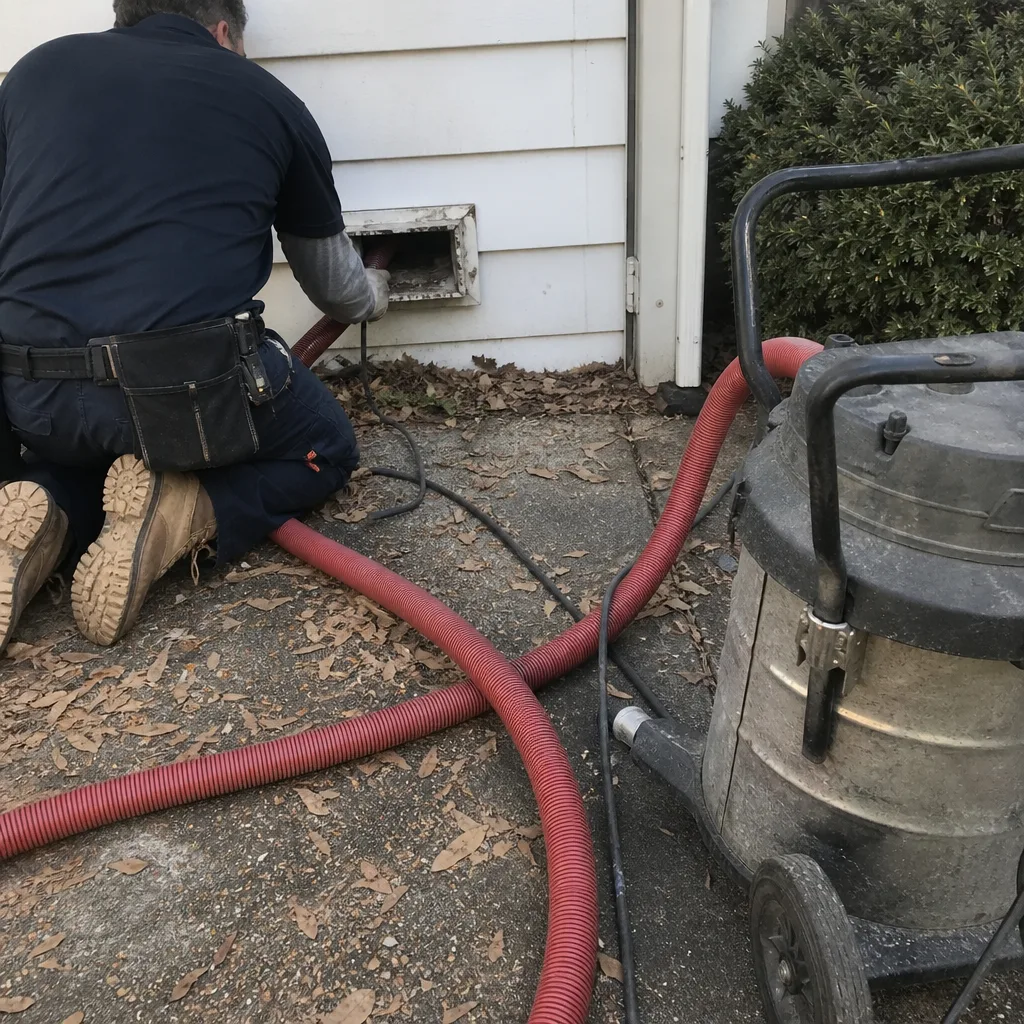 Before
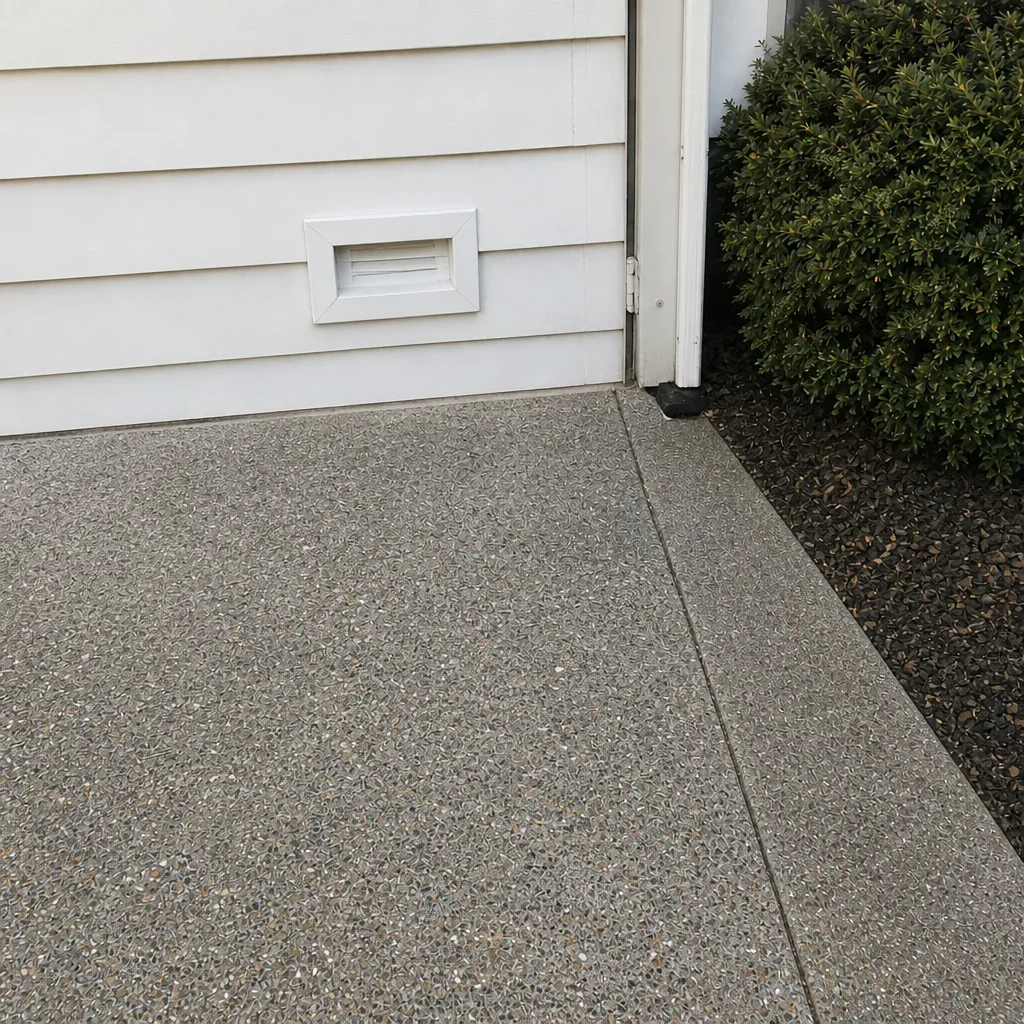 After
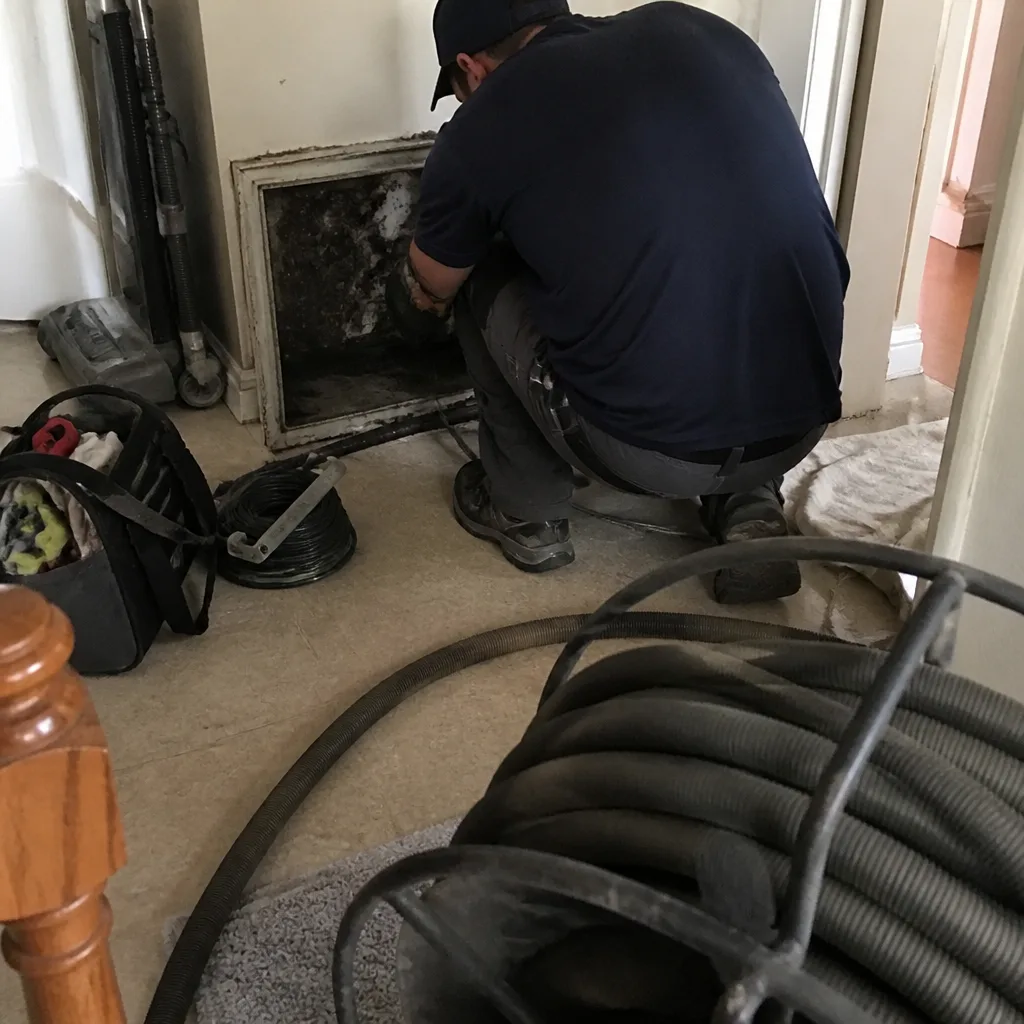 Before
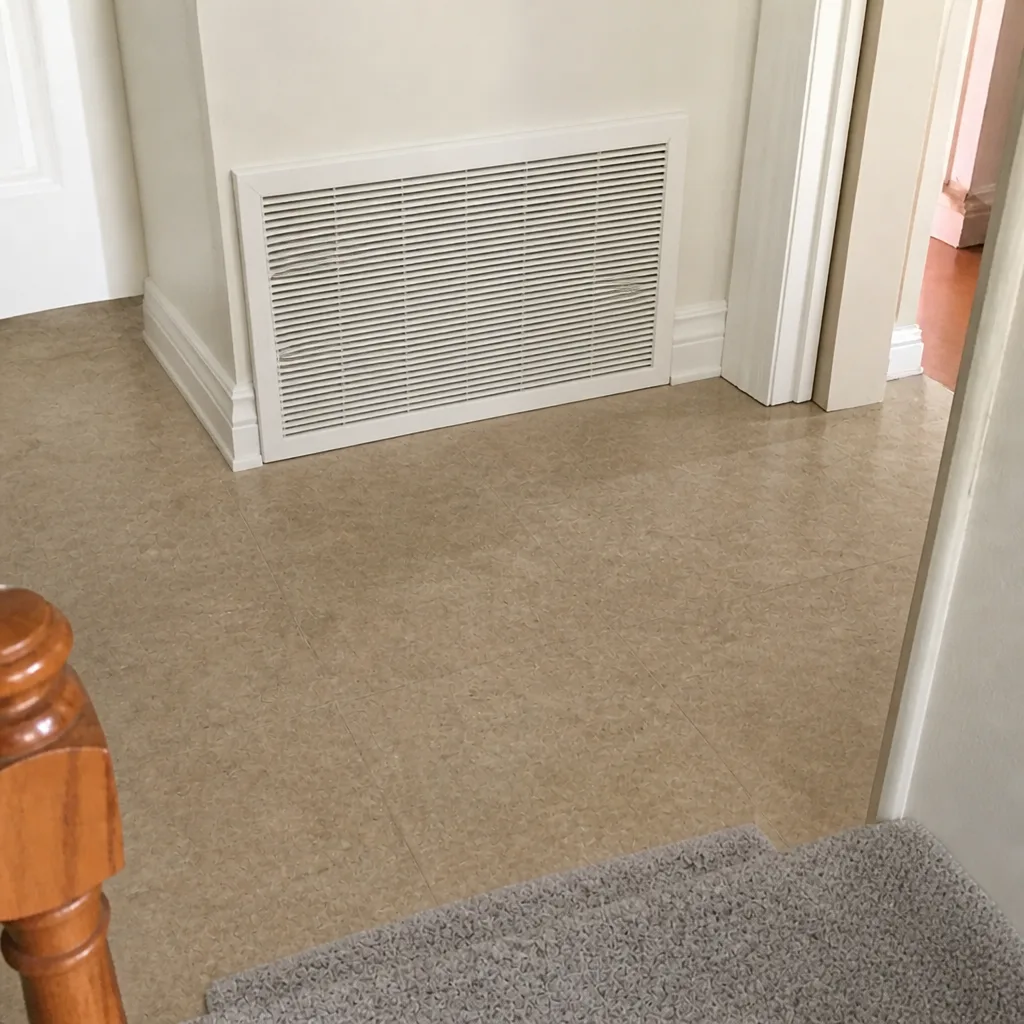 After
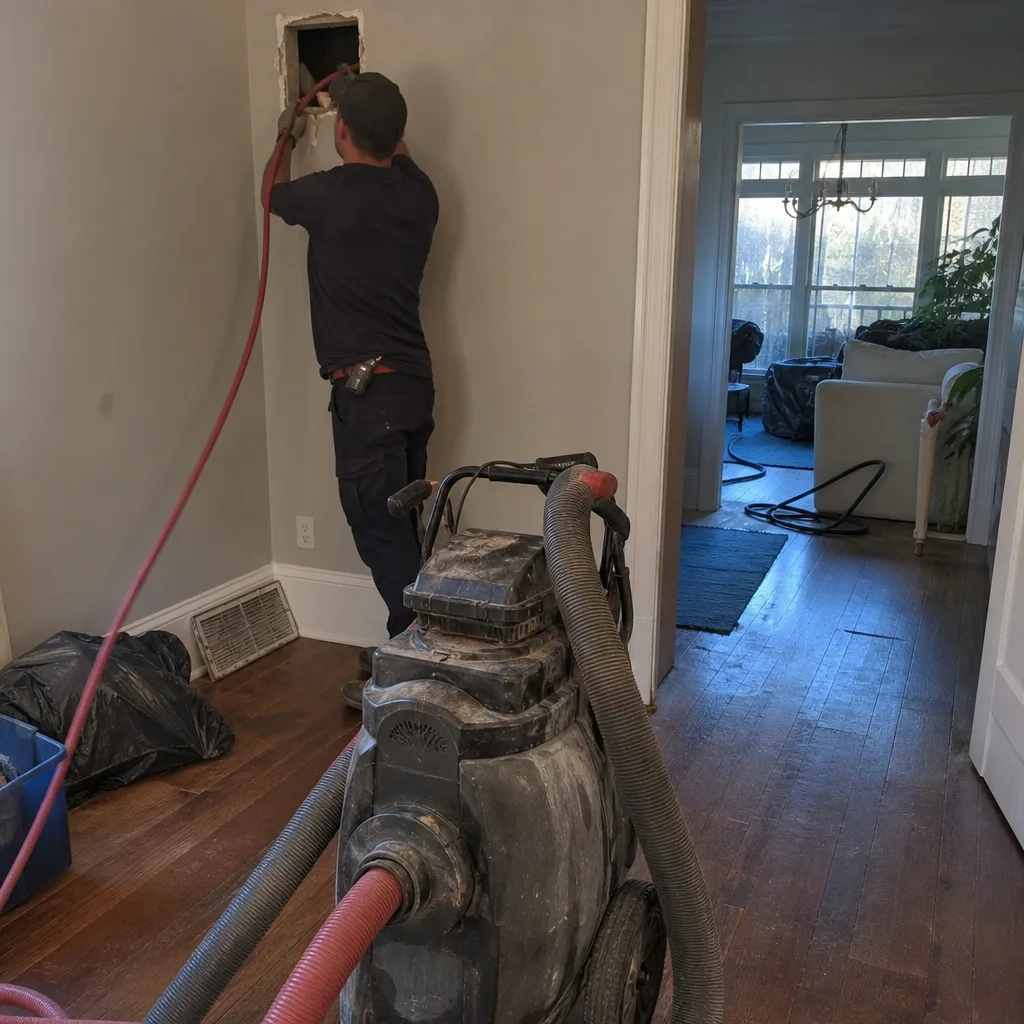 Before
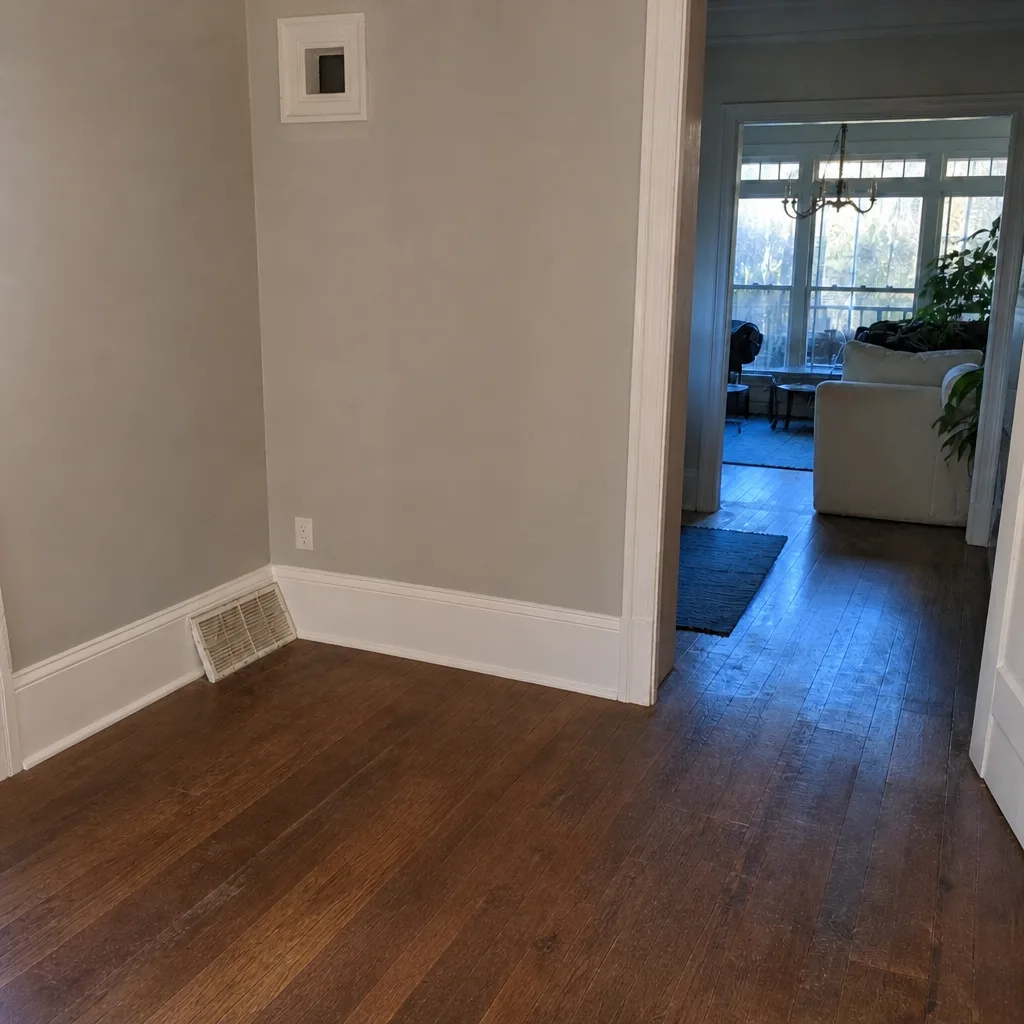 After
When to Call a Professional
Call a professional when you see two or more of the system-level signals together: uneven rooms, a filter that loads in weeks, rising runtime, a persistent musty or chemical odor, or visible dust after a renovation. A single weak register in a house where everything else performs is worth a look. A renovation that left a fine dust layer on every surface is worth an inspection even if the system seems fine. And any dryer vent more than a year without a check is worth scheduling. Air Duct Cleaning Midtown offers free estimates in Midtown – call (844) 605-0607. We answer 24/7. Fast dispatch from 7am to 7pm, Sunday through Friday. The estimate is free, and the price is set per job by the written estimate before any work starts.
Frequently Asked Questions
Most homes benefit from an inspection every few years and cleaning when the signals call for it, rather than on a fixed calendar. The honest answer is that the right interval depends on your system, your home, and events like renovation or a moisture problem. If your filters load normally, rooms are even, and runtime is stable, you likely don’t need cleaning on a schedule. If two or more warning signs are present, an inspection tells you what’s actually needed. Call (844) 605-0607 for an exact quote – estimates are free.
Cheap quotes are usually cheap because they skip the expensive parts: the air handler, the coil face, and the trunk lines. Surface-only work at a low price is a common pattern in this trade. We use Rotobrush rotary brush systems and Nikro HEPA vacuums, the same platforms used in commercial work, and we include the components that actually matter. We set one flat price per system before work starts, with no per-vent pricing. Call (844) 605-0607 for an exact quote – estimates are free.
You should see before-and-after photos of your own system, and you should be walked through what was found and what was cleaned. A professional inspection and cleaning produces documentation, not just a receipt. If a company can’t show you the condition of the components before and after, that’s a red flag. Ask to see the photos and the findings. Call (844) 605-0607 for an exact quote – estimates are free.
It can, if the smell comes from contamination in the duct system or on the coil, and it won’t if the source is a moisture problem that keeps returning. In Midtown’s humid summers, a musty smell often traces to a wet coil or drain pan, which is why we inspect those components before cleaning. Air quality sanitizing can address residual odor once the source is handled. Call (844) 605-0607 for an exact quote – estimates are free.
Yes, an inspection is worth it, because drywall dust and construction debris reach parts of the system a filter can’t protect. The blower wheel, the coil face, and the return plenum are the usual problem spots after construction. A change of filter helps but doesn’t clean those components. Have the system inspected before you run it hard for the season. Call (844) 605-0607 for an exact quote – estimates are free.
Yes. We offer duct repair and sealing as a standalone service, so a disconnected joint or a crushed run gets fixed rather than cleaned around. Leaky ducts waste conditioned air and can pull in air from unconditioned spaces, so sealing addresses both efficiency and air quality. Repairs are quoted separately and set by the written estimate. Call (844) 605-0607 for an exact quote – estimates are free.
The Bottom Line
Visible dust at the register is the last signal, not the first. The earlier indicators are the ones worth acting on: uneven airflow between rooms, filters that load faster than they should, climbing HVAC runtime, and seasonal odors that change with the system’s behavior. In Midtown, post-renovation dust and humid summers make those signals show up more often than homeowners expect. Read them early, get a real inspection of the whole air pathway, and treat cleaning as the start of a fix, not the end of one. We repair what we find, and the price is set per job before work starts.
Call (844) 605-0607 for a free estimate. We answer 24/7. Fast dispatch from 7am to 7pm, Sunday through Friday.
Written by the team at Air Duct Cleaning Midtown.