
Last updated November 25, 2026
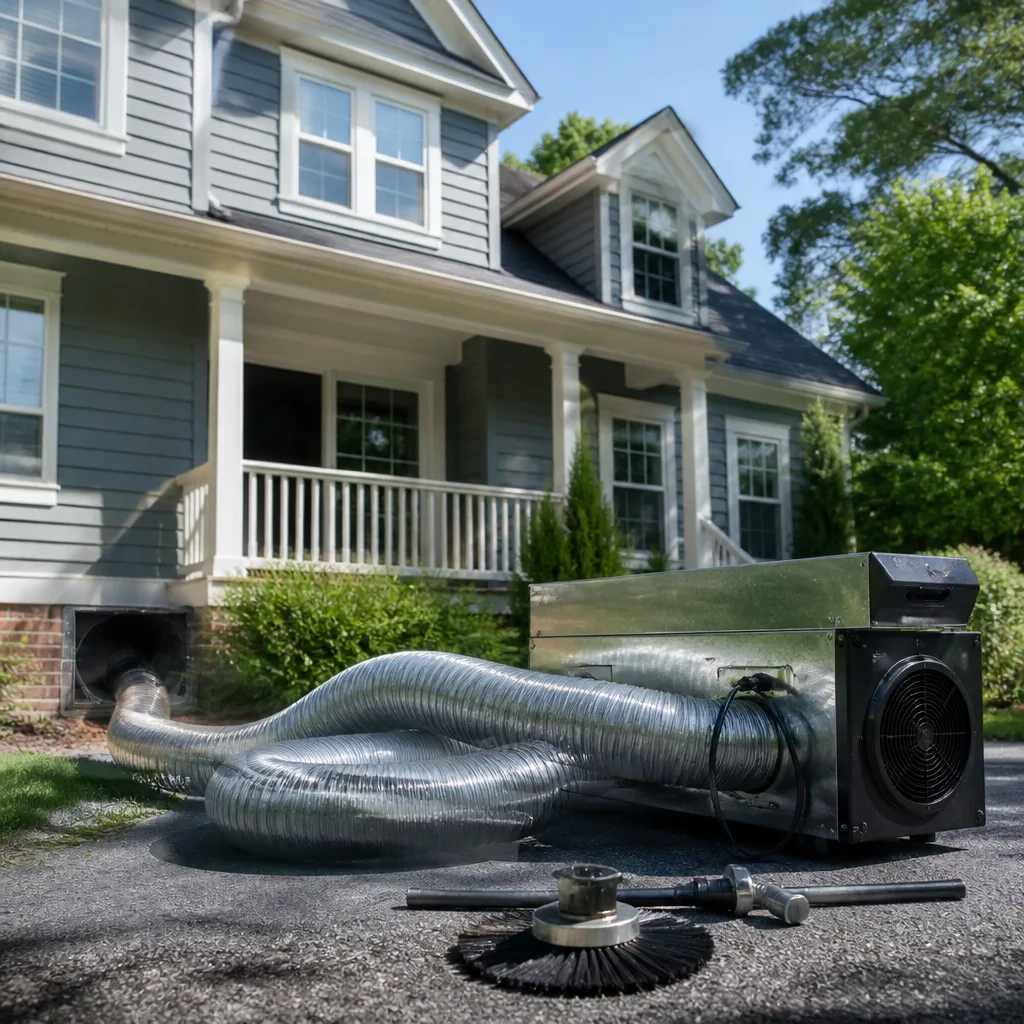 Whole-home duct cleaning
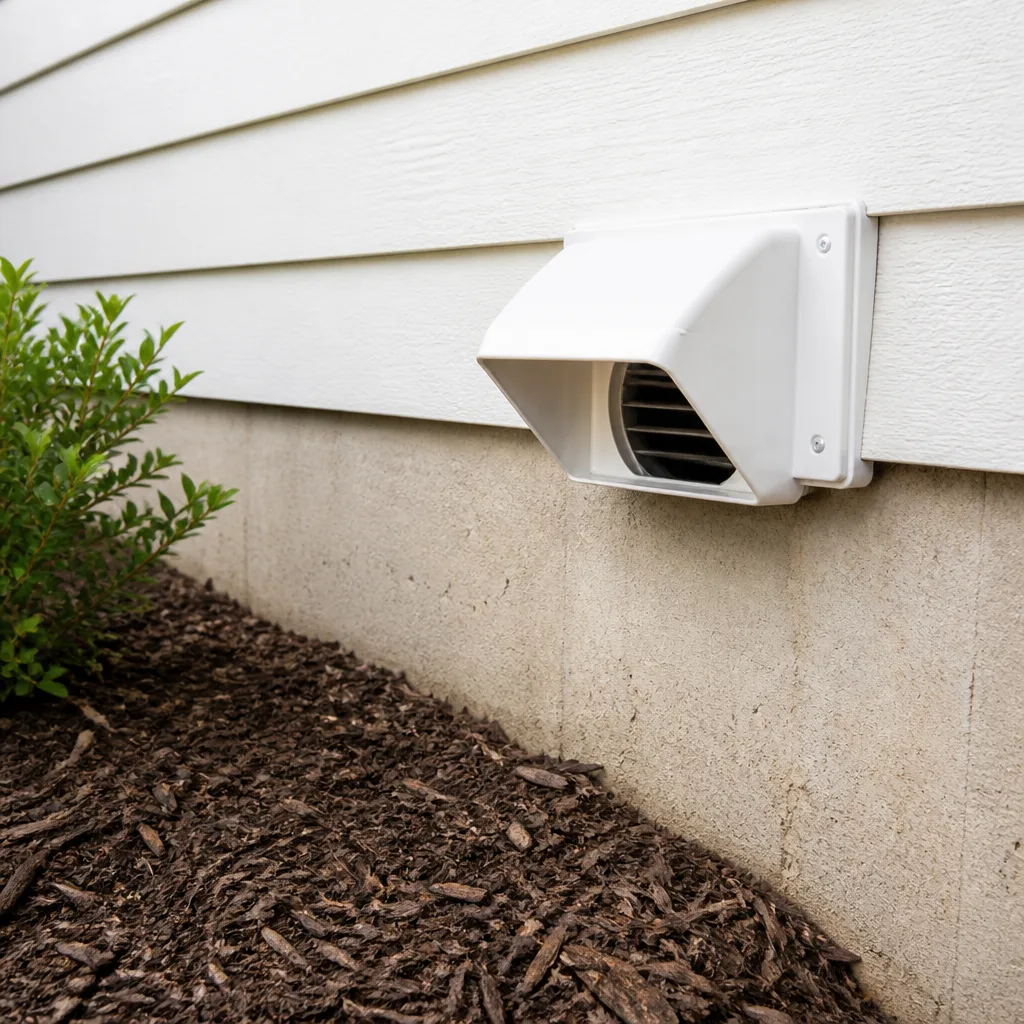 Dryer vent cleaning
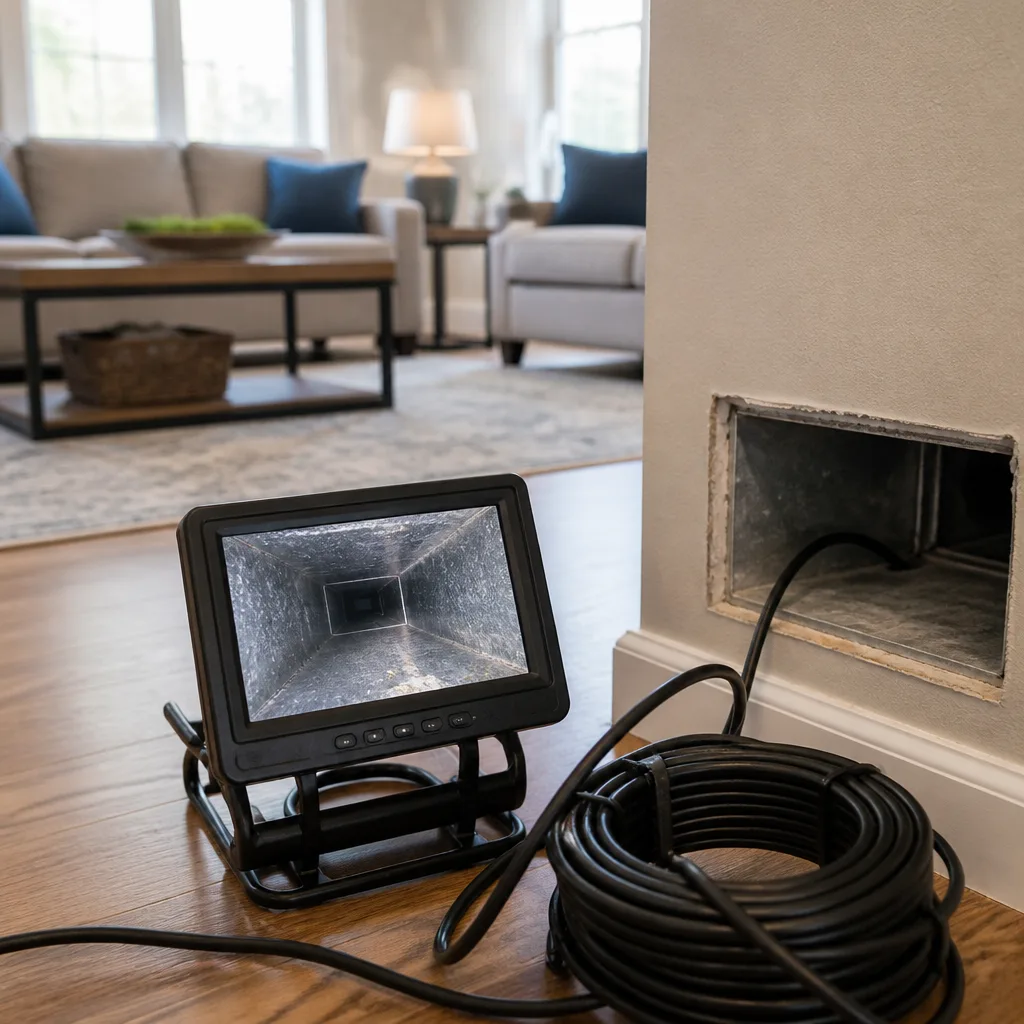 Camera inspection
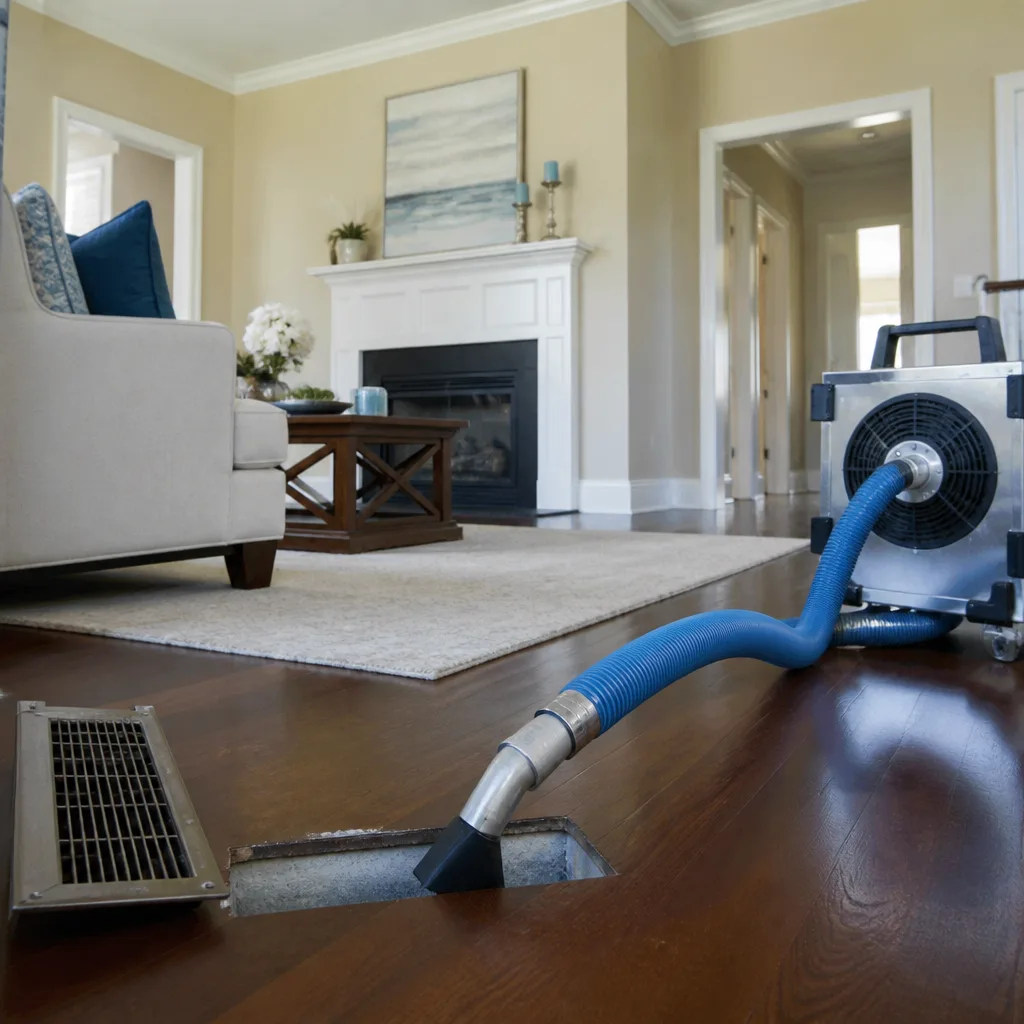 Sanitizing & deodorizing
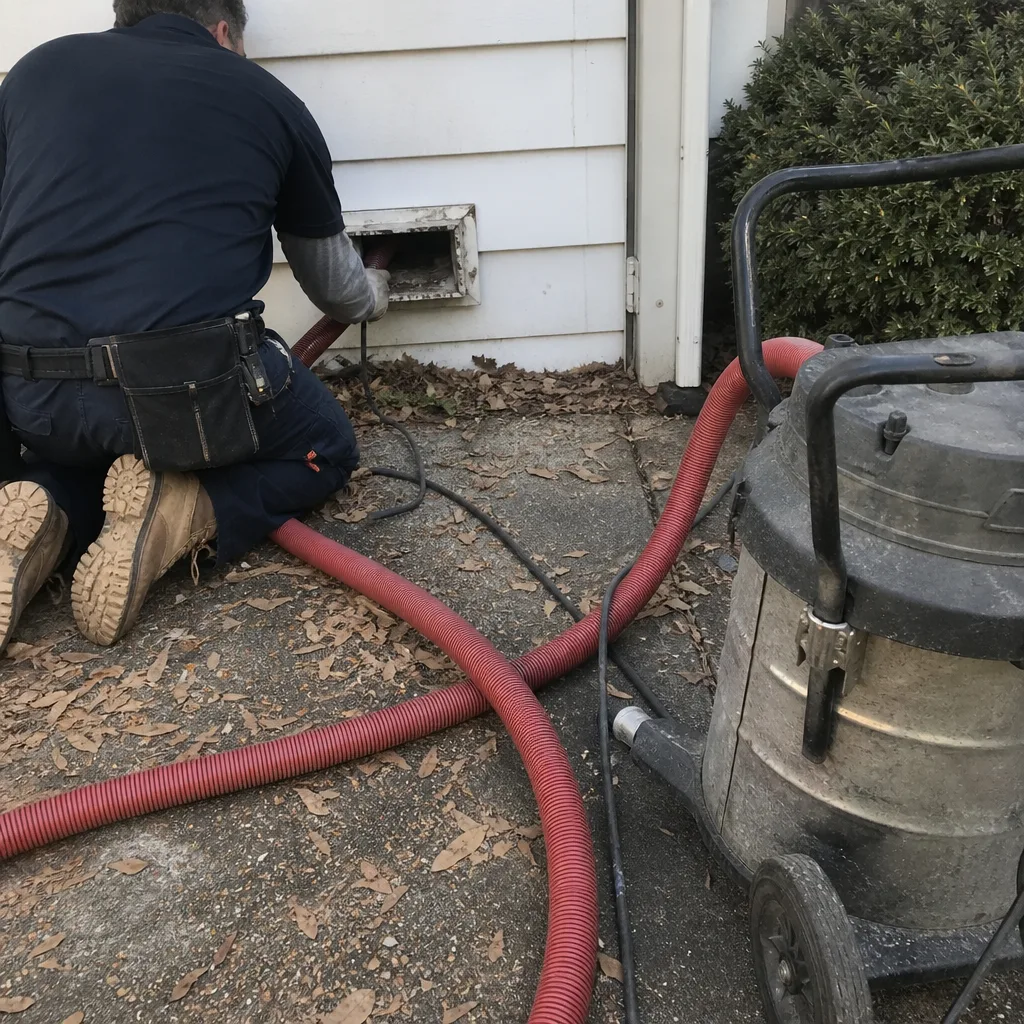
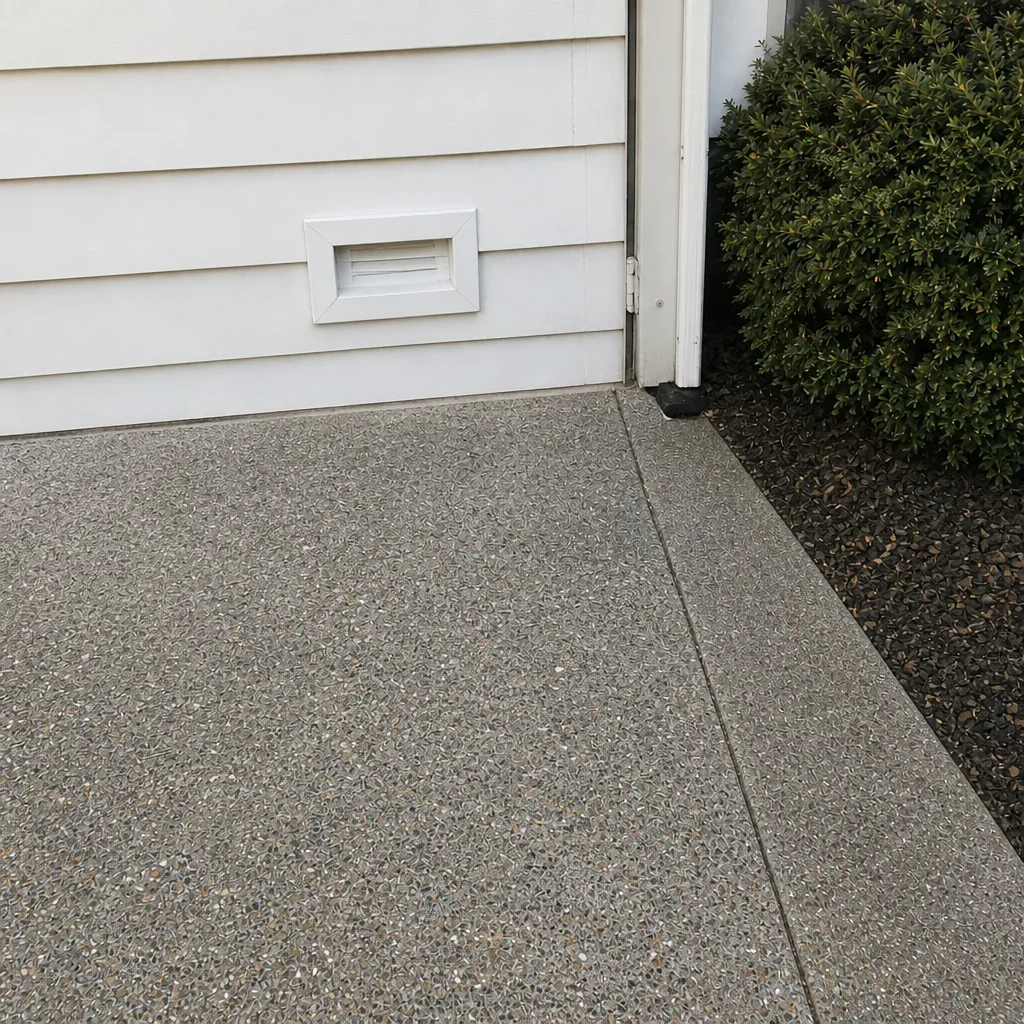
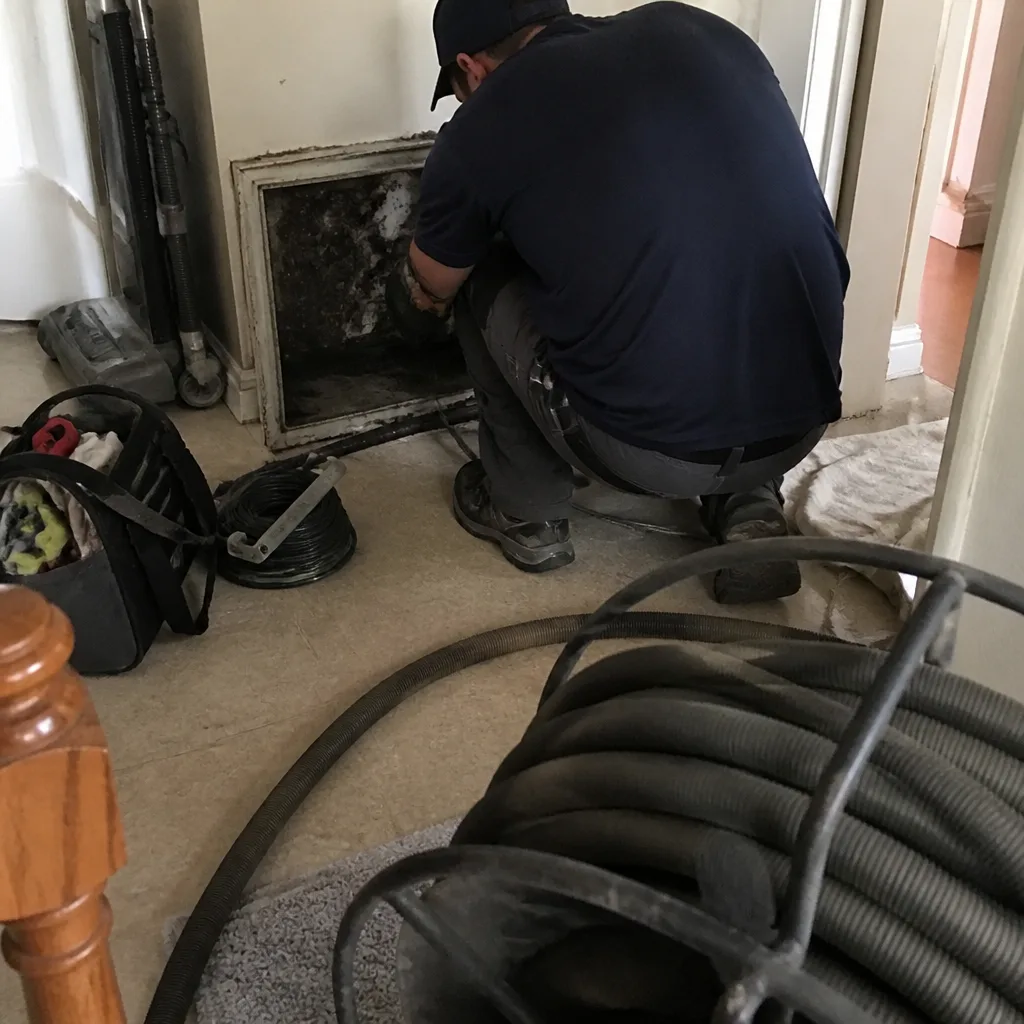
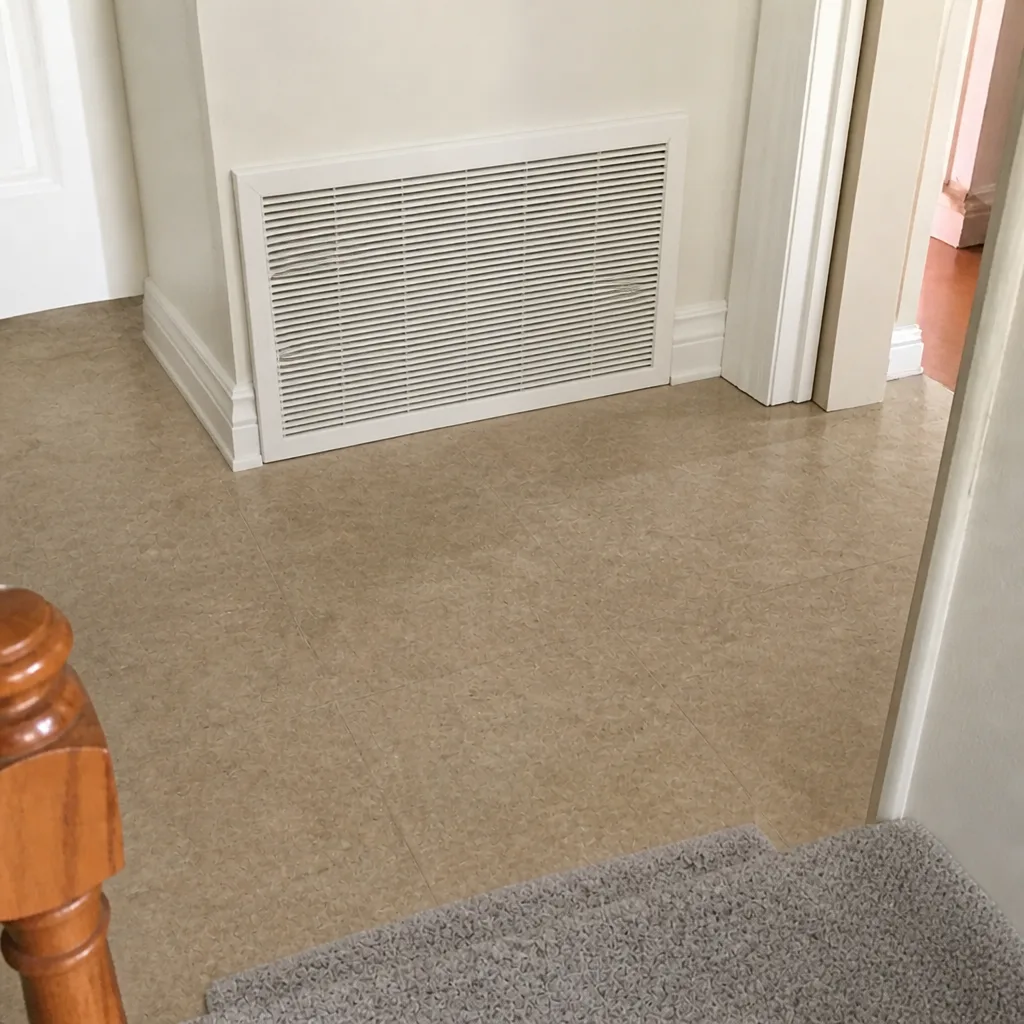
Whole-system duct and dryer vent check with before-and-after photos - you see exactly what came out of your vents
That "$99 whole-house special" is a bait ad - the real number appears once they are in your hallway, or the "clean" is a shop-vac at the register. We photograph the inside of your ducts before and after instead.
Air Duct Cleaning Permits, Codes & Inspections in Midtown, GA: What You Need to Know
Most homeowners assume the only paperwork that matters for indoor air quality work is a service invoice. That’s backwards. The cleaning itself almost never needs a permit. The repair and sealing work that usually follows it often does, and in Georgia those tasks fall under mechanical code rules that most people never hear about until a buyer’s inspector starts asking questions. In Midtown, where condos and older homes share walls, chases, and mechanical closets, a small unpermitted modification can follow a property through a sale. This guide walks through which duct tasks are classified as maintenance, which count as mechanical work, how City of Atlanta and Fulton County jurisdiction interact, and the questions to ask before you approve a repair scope.
Quick Answer
Air duct cleaning alone generally does not require a permit in Midtown or anywhere else in Georgia. Duct repair, sealing that alters the system’s design, and any HVAC-adjacent modification usually do, and that work is expected to be performed under a licensed mechanical contractor or a properly supervised scope of work. If your project touches only cleaning and sanitizing, you’re in maintenance territory. If it cuts, seals, reroutes, or replaces ductwork, treat it as a mechanical project and confirm the licensing and permit path before work begins.
Styles & brands we work with
- Whole-home duct cleaning
- Dryer vent cleaning
- Camera inspection
- Sanitizing & deodorizing
Table of Contents
- Maintenance or Mechanical? What Georgia’s Codes Actually Distinguish
- City of Atlanta vs. Fulton County: Which Permit Applies in Midtown?
- What Duct Sealing and Repair Requires From a Licensed Mechanical Contractor
- How Unpermitted Duct Work Shows Up During a Home Inspection
- Questions to Ask a Contractor Before Approving Repair Scope
- Why Midtown’s Housing and Climate Make Duct Leakage Worse
- What a Proper Whole-System Job Looks Like From Start to Finish
- Common Mistakes to Avoid
Maintenance or Mechanical? What Georgia’s Codes Actually Distinguish
Georgia’s mechanical codes draw a line between routine maintenance and work that changes a system. Cleaning falls squarely on the maintenance side. Nothing about running a rotary brush through a duct run, pulling debris into a HEPA vacuum, or fogging a sanitizing solution alters the system’s design, capacity, or layout. Cleaning restores a system to how it was supposed to perform. It doesn’t redesign it.
Repair is different. When ductwork is cut, sealed with mastic or new material, rerouted, added to, or replaced, the work changes the air distribution system. That’s mechanical territory. The same applies to any modification of the air handler enclosure, plenum connections, or return-air design. A sealed duct run has a different leakage profile than an unsealed one, and the code treats that as a design change, not housekeeping.
Here’s the practical split most Midtown homeowners don’t see spelled out:
- Maintenance, no permit: Source-removal cleaning, HEPA vacuuming of duct interiors, sanitizing, dryer vent cleaning, general coil cleaning, and filter-to-filter upkeep.
- Mechanical work, permit path applies: Cutting into ductwork, replacing flex or rigid runs, sealing joints in a way that changes the design, adding or relocating supply or return drops, and modifying the air handler or plenum.
- Gray area, ask first: Replacing a section of damaged flex inside a chase, reconnecting a disconnected collar, and taping or mastic-sealing accessible joints that were never sealed.
The gray area is where most confusion lives. A disconnected flex collar in a ceiling cavity looks like a small fix. In code terms it can be a mechanical repair, which means the person doing it should be able to explain their licensing classification before the work starts. That’s the first thing we ask about on any Midtown job that moves beyond cleaning.
City of Atlanta vs. Fulton County: Which Permit Applies in Midtown?
Midtown sits inside the City of Atlanta, which has its own permitting authority. That makes it a city permit jurisdiction for mechanical work inside the city limits. Fulton County issues permits for unincorporated areas and some other municipalities, and the county assessor’s office tracks records differently from the city’s. For a Midtown address, assume the City of Atlanta Office of Buildings is your starting point for any mechanical permit question.
Where it gets tricky is the type of property. A single-family home, a condo inside a mid-rise, and a rental duplex in Midtown don’t share the same approval path. The building department handles the mechanical scope, but condos add a layer: your HOA or building management may have its own rules about when access through shared chases is allowed and which contractor can work inside common areas. We’ve seen Midtown owners get a clean city permit only to discover the building requires notice and a certificate of insurance on file before anyone climbs into a ceiling.
Use this order of operations before booking duct repair:
- Identify the jurisdiction. Confirm with the City of Atlanta Office of Buildings whether your address is inside the city limits and whether the scope needs a mechanical permit.
- Ask the HOA or building manager. For condos and shared-wall properties, confirm access rules, working hours, and any contractor documentation the building requires.
- Get a written scope. The scope should state what will be cut, sealed, replaced, or rerouted. Cleaning alone should be listed separately.
- Match the contractor to the scope. Cleaning can be done by an IAQ contractor. Mechanical repair should be performed by a licensed mechanical contractor or under one.
- Keep the record. Save the permit number, inspection sign-off, and before-and-after photos with your home records.
The City of Atlanta and Fulton County systems don’t talk to each other automatically for a private owner’s file. If your repair happens without a permit, there’s no record to point to later. That absence is what shows up in a transaction.
What Duct Sealing and Repair Requires From a Licensed Mechanical Contractor
Georgia licenses contractors by classification, and the classifications matter for duct repair. A general contractor license doesn’t automatically cover mechanical work. A mechanical contractor license does. Specialties exist within both, and the scope of a license determines what the holder can legally perform and pull permits for.
An indoor air quality contractor, by contrast, operates on the cleaning and remediation side. That’s where the whole-system services fit: air duct cleaning, dryer vent cleaning, HVAC cleaning, sanitizing, and the assessment that tells you whether repair is even needed. When a job moves into cutting, sealing, or replacing duct runs, that’s where the mechanical license question comes in, and you should ask it directly.
Here’s how we handle it on Midtown jobs. We clean first and document what we find. If we find disconnected collars, crushed flex, or joints that were never sealed, we show the homeowner the photographs and explain what repair would involve. If the repair crosses into mechanical scope, we say so plainly, and the homeowner can decide whether to proceed through a licensed mechanical contractor or pursue the cleaning path only. We don’t attach a price to work we can’t see. That’s the honest version of this conversation, and it’s rarer than it should be.
What a licensed mechanical contractor should be able to demonstrate:
- The specific license classification that covers the scope in question
- Whether a permit is required for the job and who pulls it
- Whether inspection is required after the work and who requests it
- Current insurance coverage on file
- A written scope that itemizes cleaning versus repair
If a contractor can’t answer all five plainly, that’s your signal. Not necessarily that they’re dishonest, just that they may be outside the scope of their classification on the repair portion.
How Unpermitted Duct Work Shows Up During a Home Inspection
Unpermitted duct work has a signature. A home inspector or buyer’s HVAC specialist sees it in the same places every time: fresh mastic on joints that don’t have a corresponding permit record, mismatched flex brands inside the same run, new collars on old plenum penetrations, and ceiling patches that don’t match the surrounding drywall. None of these prove a problem on their own. Together, they prompt a code-compliance question that gets added to the buyer’s repair demand list.
What happens next is simple and expensive in the wrong ways. The seller has to either obtain an after-the-fact permit or explain the absence of one. That means opening the ceiling again, documenting the repair, and in many cases having a licensed mechanical contractor sign off. In Midtown, where a meaningful share of the housing stock was built before current code cycles, the same signature can also appear on work done decades ago by a previous owner. That history still creates friction in a transaction, even though the current owner did nothing wrong.
The cleanest prevention is documentation. For any duct repair in Midtown, keep:
- The written scope itemizing what was accessed, cut, sealed, or replaced
- Before-and-after photographs of every section touched
- Permit number and inspection sign-off where a permit was required
- Contractor license classification and insurance certificate
- A one-page summary of the work with the date and address
Photographs do double duty here. They prove the work was done, and they show the next inspector exactly what changed. That’s part of why we photograph every system we open: the record has value long after the cleaning is finished.
Questions to Ask a Contractor Before Approving Repair Scope
The right questions change the outcome of a repair project. Ask these before signing anything, and ask them in the order below.
- “What’s your license classification, and does it cover mechanical duct work?” If the scope includes cutting, sealing, or replacing ductwork, the answer should name the classification.
- “Will this need a mechanical permit through the City of Atlanta, and who pulls it?” For a Midtown address, the answer should reference the City of Atlanta approval path, not a vague “we handle everything.”
- “Does the scope separate cleaning from repair?” If cleaning and repair come as one blended number with no line items, ask for the breakdown. Cleaning can be done by an IAQ contractor. Repair scope is a different conversation.
- “How will you document what you find and what you fix?” Before-and-after photographs of your own system, labeled by location, is the standard.
- “What equipment do you use?” Professional-grade rotary brush and HEPA vacuum platforms are the baseline for real cleaning. Consumer tools won’t pull debris out of a Midtown chase.
- “What happens if you find a contaminated or damaged run?” A containment-first approach is the standard for contaminated systems. Ask how they handle abatement-grade filtration when they need it.
- “If this repair needs a licensed contractor I don’t have, what’s the handoff?” A clean answer here is a sign you’re talking to someone who knows the boundaries of their own scope.
Anyone who resists these questions is telling you something useful. A professional-grade provider should be glad to answer them, because the answers are already part of their process.
Why Midtown’s Housing and Climate Make Duct Leakage Worse
Midtown’s housing stock runs from early-twentieth-century homes to mid-rise condos with shared mechanical chases. Older detached homes often have original hard duct or first-generation flex, both of which accumulate joint leakage over decades. Condos share plenum space between units, so a leak inside one residential unit can pull air from neighboring spaces. That mixing is invisible from inside the unit and shows up as odors, dust, or a system that can’t hold temperature.
Atlanta’s long, humid cooling season adds real pressure. Duct leakage in a humid climate isn’t just an efficiency loss; it’s a moisture path. When a duct joint leaks, it pulls warm, humid attic or chase air into the airstream, and that moisture can condense on cooler surfaces inside the system. Over a season, that’s how a mild job becomes a musty one. It’s also how attic condensation forms above a ceiling in Midtown homes where the return path runs through unconditioned space.
Both conditions push the project past cleaning. A system that has been leaking moisture for years is a candidate for assessment, sealing, and possible repair, not just a deeper vacuum. That’s the honest sequencing, and it’s the reason whole-system capability matters more than a single service visit can offer.
What a Proper Whole-System Job Looks Like From Start to Finish
Here’s how a full job runs when it’s done right, and what each stage involves.
- Walk-through and assessment. We inspect the air handler, plenum connections, supply and return layout, and any accessible duct runs. We photograph what we see.
- Containment. For any job where contamination is likely, we set up abatement-grade filtration so debris doesn’t migrate into living space. That matters in Midtown condos with shared chases.
- Source removal with professional equipment. We use a Rotobrush rotary brush system and Nikro HEPA vacuum to agitate and capture debris at the source. Consumer tools don’t reach the same surfaces.
- HVAC and coil cleaning where included. The air handler and cooling coil are part of the air pathway, and a clean duct system that feeds a dirty coil doesn’t deliver the result.
- Dryer vent cleaning when scheduled. This is a dedicated service, not an afterthought, and it’s one of the highest-value fire-safety tasks in a home.
- Repair and sealing assessment. We show you what we found. Disconnected collars, crushed flex, and unsealed joints come with photographs and a written scope. If the scope crosses into mechanical work, we say so clearly.
- Air quality add-ons where appropriate. Honeywell and Aprilaire filtration options are available when a homeowner wants to keep improving IAQ after the cleaning.
- Before-and-after documentation. Every section touched, photographed. Cleaning and repair line items separated on the written scope.
That’s the whole sequence. One call, one point of responsibility, one written record at the end. You can visit Air Duct Cleaning Midtown to see the five services that make up a full-project scope.
Common Mistakes to Avoid
- Assuming all duct work is maintenance. Cleaning is. Repair isn’t. Treat any cut, seal, or replace as a mechanical project and confirm the permit path before work starts in Midtown.
- Letting a contractor blend cleaning and repair into one line item. You lose the ability to compare scopes and to know what actually required a permit. Ask for the breakdown in writing.
- Skipping the City of Atlanta question. A Midtown address inside the city limits is a city permit jurisdiction. Ask specifically which office handles the approval, and get it in writing.
- Overlooking the condo or HOA layer. Midtown buildings have access and documentation rules that city permitting doesn’t cover. Confirm before the day of work.
- Not asking about licensing classification. A general contractor classification doesn’t automatically cover mechanical duct work. Ask the question, get the classification named.
- Approving repair with no photographic record. Without before-and-after photographs of your own system, there’s no proof of what was done. The next buyer’s inspector will ask.
- Choosing a quote only on the low number. The lowest quote usually excludes the assessment, the containment, and the repair scope. What remains after those are added is rarely the cheapest number.
See the difference
 Before
 After
 Before
 After
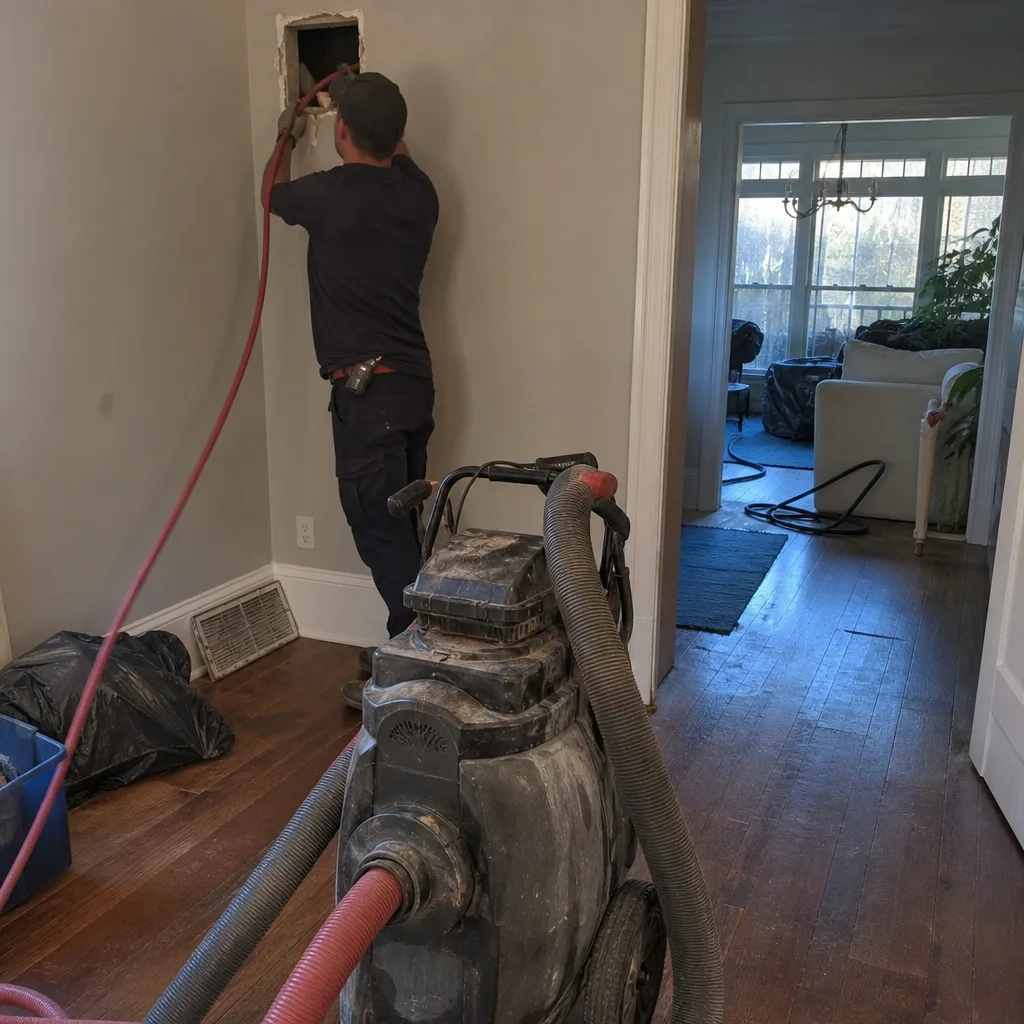 Before
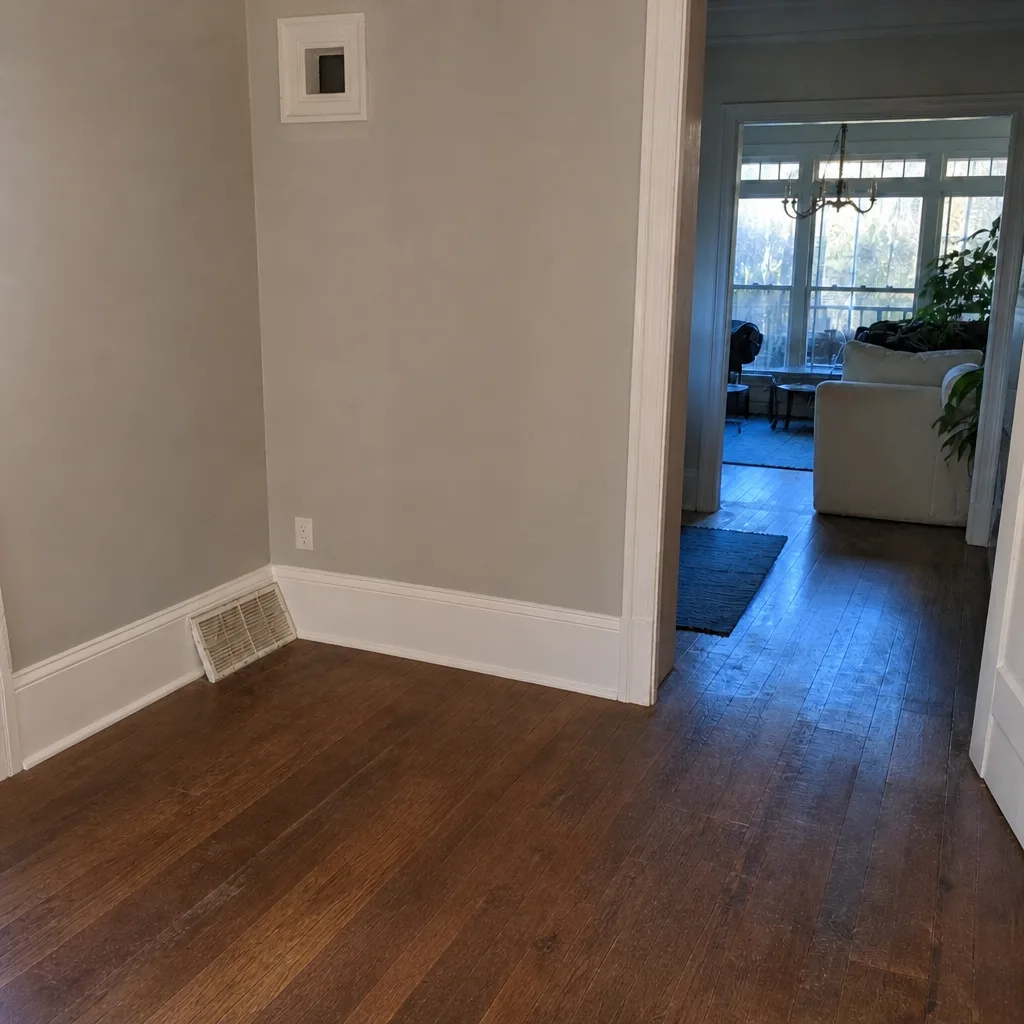 After
When to Call a Professional
Call a professional when you notice musty odors from supply registers that don’t improve after a filter change, when visible dust streaks shoot out of a vent after the system cycles on, when a recent renovation has left construction debris in the return path, or when you’re buying or selling a Midtown property and the inspection report flags duct work. Call before approving any duct repair scope, especially in a condo or shared-wall building where the mechanical scope and the HOA approval path both need to be clear. Call if a dryer takes two cycles to finish a load, if a section of flex has become visibly crushed or disconnected, or if your system runs longer than it should to hold temperature. Air Duct Cleaning Midtown offers free estimates in Midtown. Call (844) 605-0607.
Frequently Asked Questions
No. Air duct cleaning is classified as routine maintenance and does not require a permit in Midtown or anywhere else in Georgia. A permit only becomes relevant when the work involves cutting, sealing, rerouting, or replacing ductwork, which is mechanical work handled under a different classification. Call (844) 605-0607 for an exact quote on a cleaning scope, and we’ll tell you up front if what you’re describing crosses into repair. Estimates are free.
Sealing is usually mechanical work when it changes the system’s design, and maintenance when it’s limited to closing accessible joints on an otherwise intact system. The deciding factor is whether the work alters the air distribution layout. If you’re unsure, describe the scope to a licensed mechanical contractor before approving it. Call (844) 605-0607 and we’ll help you sort out what needs what.
The City of Atlanta Office of Buildings handles mechanical permits for addresses inside the city limits, and Midtown falls within that boundary. Fulton County handles permits for unincorporated areas and some other municipalities in the county. Confirm your address with the city office first, then check whether your building has additional requirements. Call (844) 605-0607 for a free estimate that separates cleaning from any repair scope.
Check the permitted-work history through the City of Atlanta or Fulton County records for your address. A home inspector or HVAC specialist can also identify likely unpermitted work from physical signs like mismatched materials or fresh mastic with no record. If there’s no record, the safest path is a documented assessment before any new work is approved. Call (844) 605-0607 to schedule a whole-system evaluation, and we’ll photograph everything we find.
Professional-grade rotary brush and HEPA vacuum systems are the baseline, along with abatement-grade filtration when contamination is likely. In Midtown condos with shared chases, containment matters because debris migration affects neighbors. We run Rotobrush rotary brush and Nikro HEPA vacuum systems, with Abatement Technologies filtration for containment-first work. Call (844) 605-0607 for a free estimate.
Cleaning often helps, but if the smell returns quickly, the source is usually moisture entering the system through a duct leak or a disconnected run. That’s a repair problem, not a cleaning problem, and it’s why the assessment step matters. We document what we find with photographs and quote repair separately. Call (844) 605-0607 for a free estimate and we’ll walk through the likely causes before you approve any scope.
The Bottom Line
Cleaning your ducts in Midtown is maintenance. Repairing, sealing, or reconfiguring them is mechanical work with a permit path and a licensing question attached. The distinction matters most in three places: when you approve a repair scope, when an inspector looks at your system during a transaction, and when moisture has been leaking into your ductwork long enough to become a bigger problem. Ask the seven questions, keep the documentation, and separate cleaning from repair in writing. If you’re in Midtown and want a scope that tells you the difference plainly, call (844) 605-0607. We answer 24/7. Fast dispatch from 7am to 7pm, Sunday through Friday.
Written by the team at Air Duct Cleaning Midtown.