
Last updated November 25, 2026
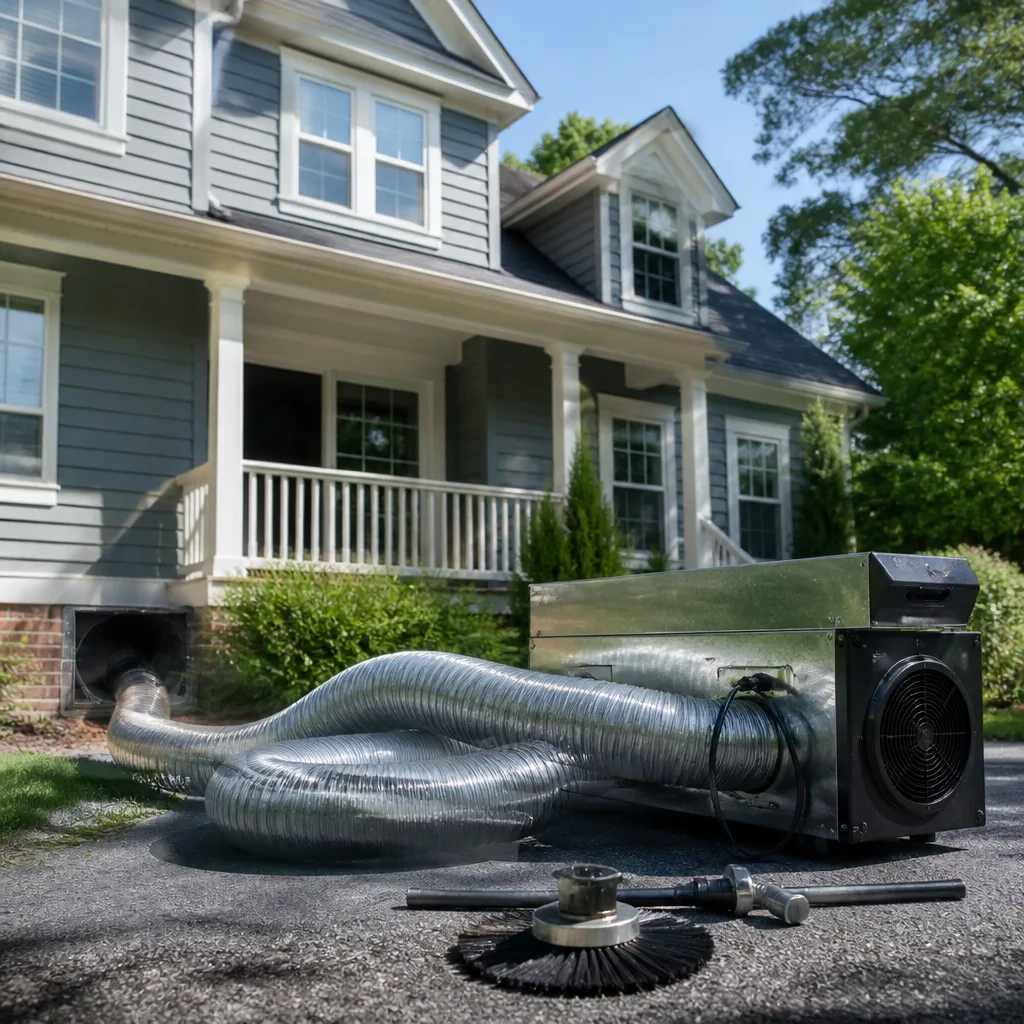 Whole-home duct cleaning
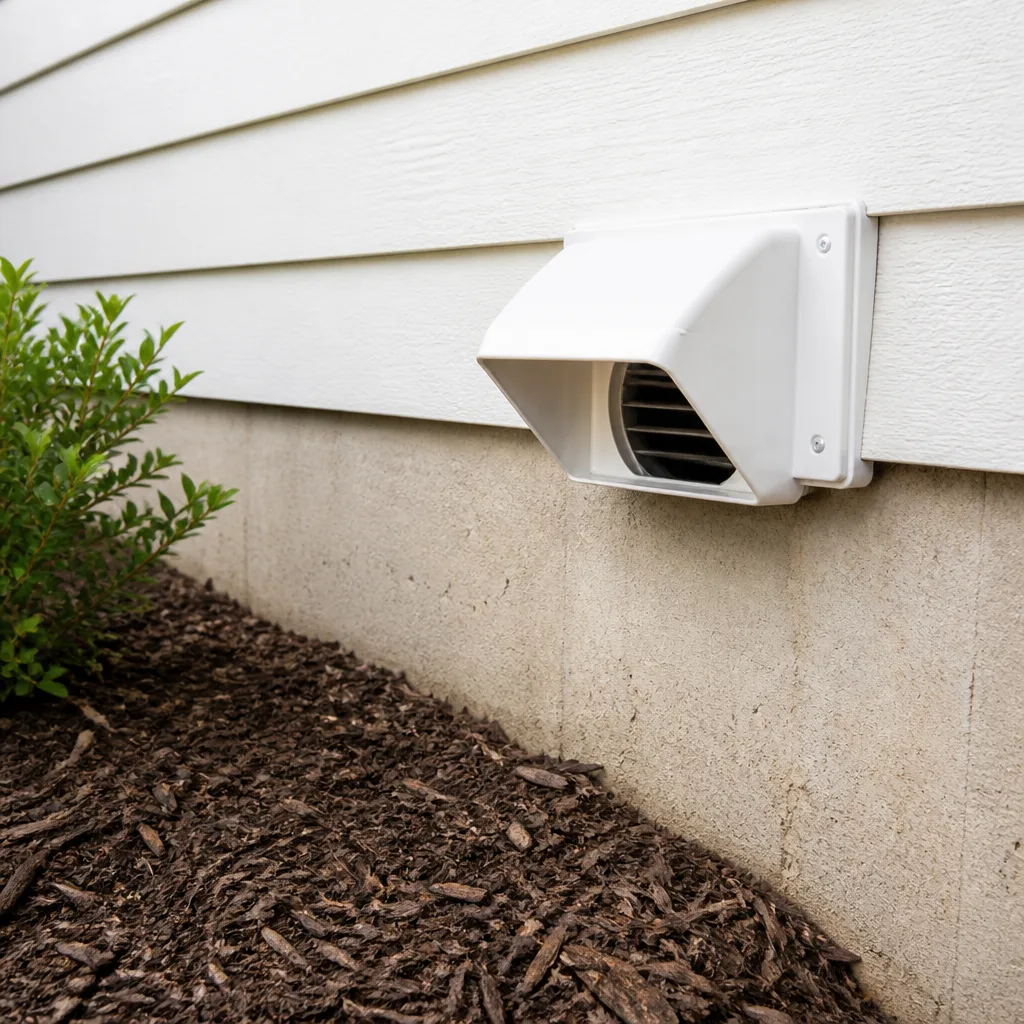 Dryer vent cleaning
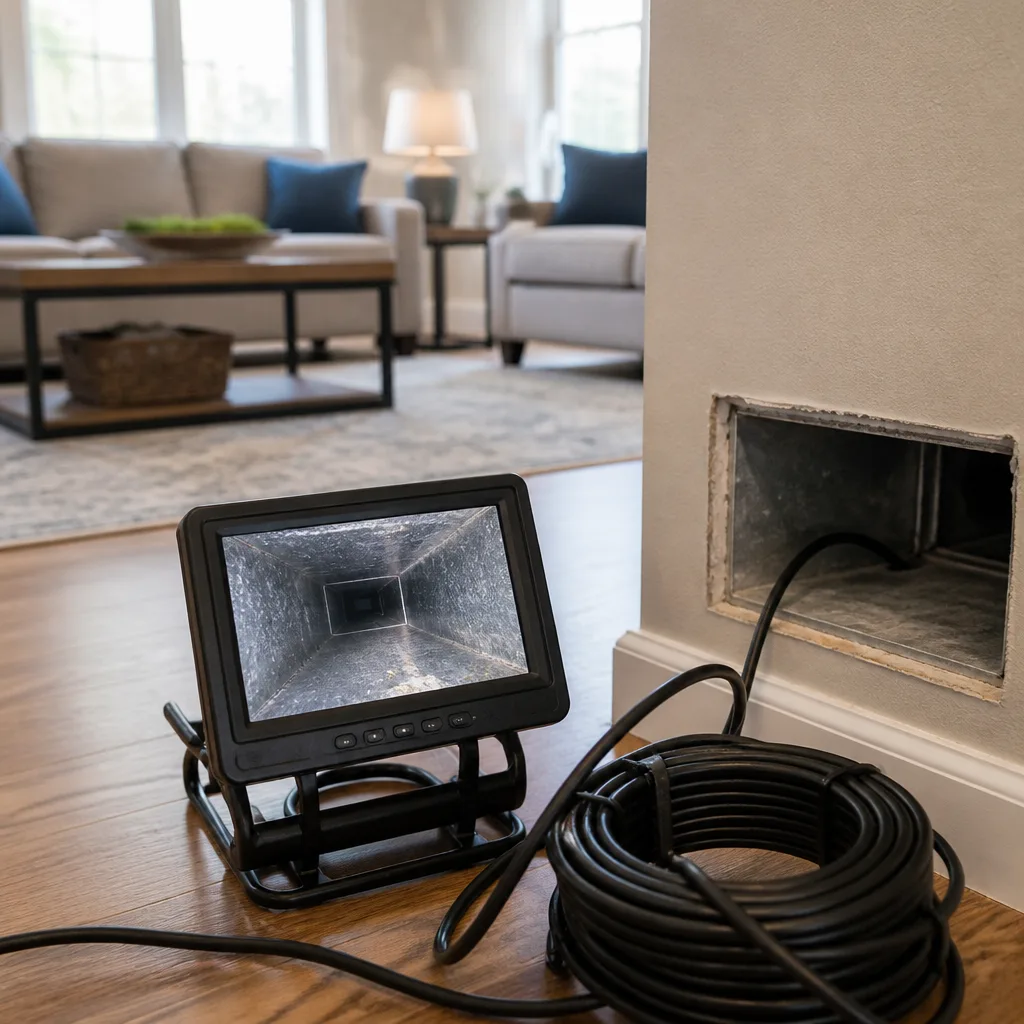 Camera inspection
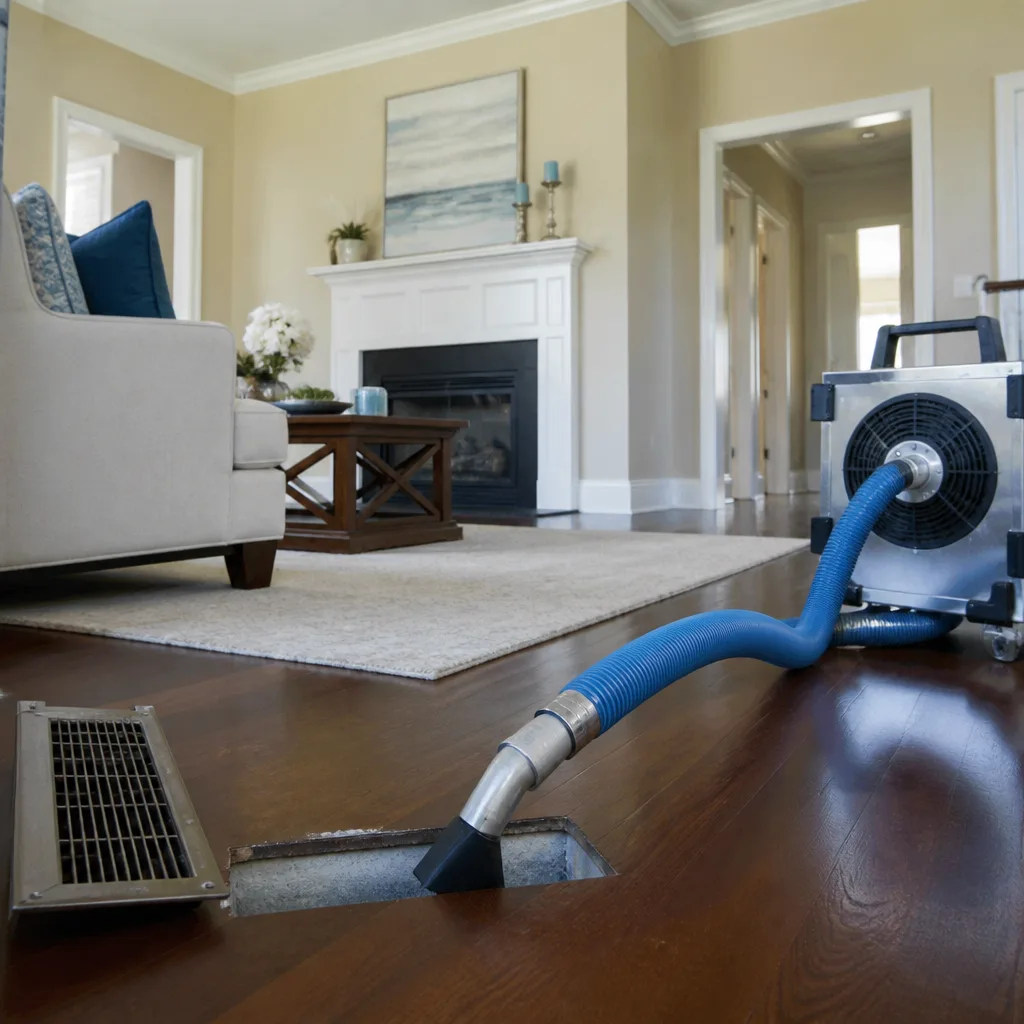 Sanitizing & deodorizing
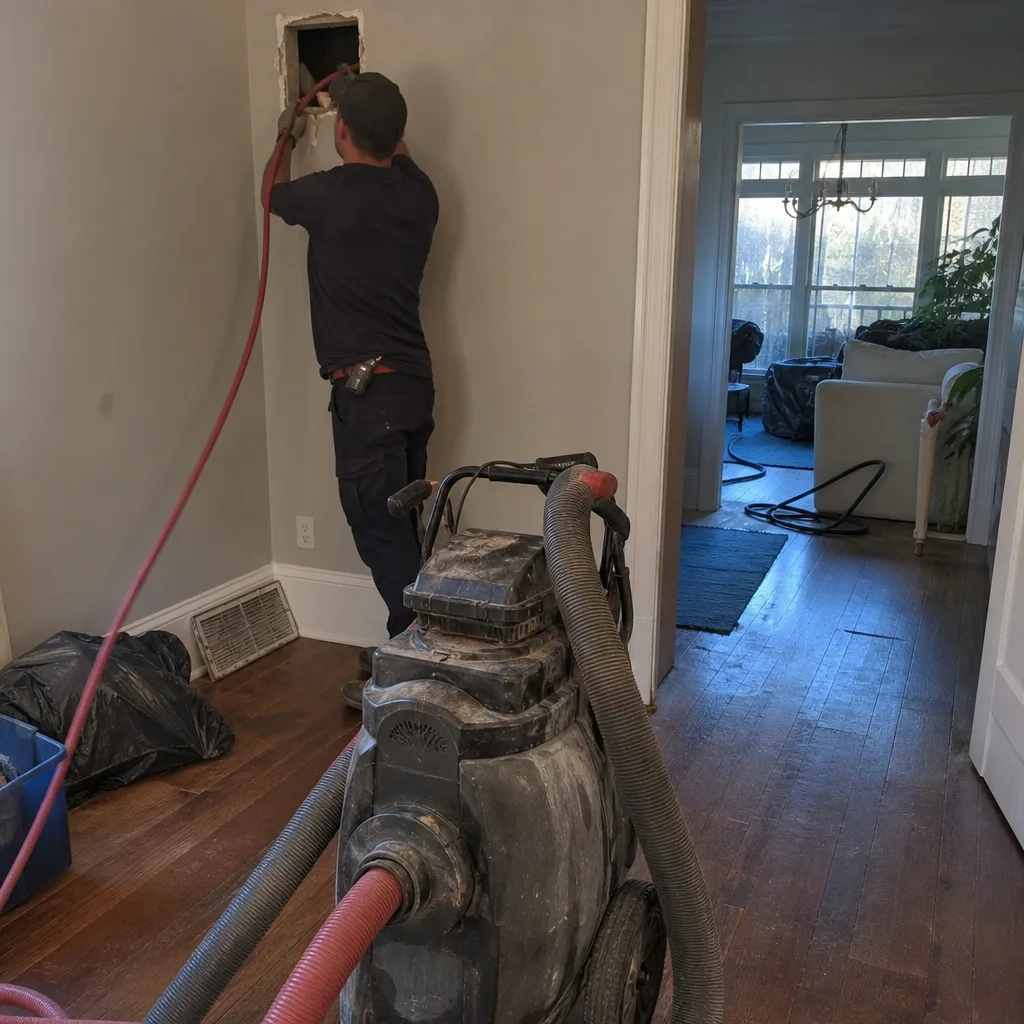
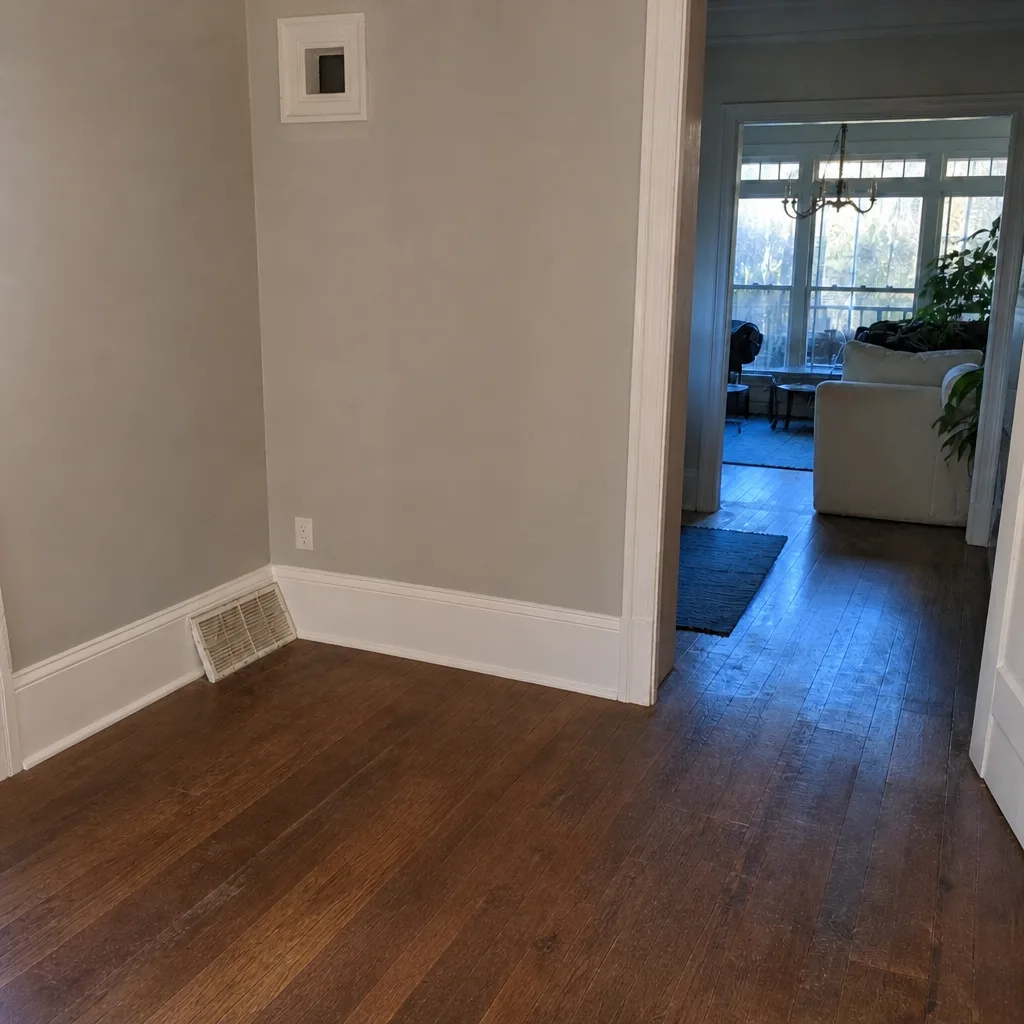
Whole-system duct and dryer vent check with before-and-after photos - you see exactly what came out of your vents
That "$99 whole-house special" is a bait ad - the real number appears once they are in your hallway, or the "clean" is a shop-vac at the register. We photograph the inside of your ducts before and after instead.
Air Duct Cleaning Emergency Preparedness Guide for Midtown Homes
The instinct after a basement flood or a kitchen fire is to get the house back to normal as fast as possible. So the blower gets switched on, the thermostat goes back to a comfortable number, and the system pushes air through the house again. That single move is the mistake. Until the duct system is isolated and inspected, that same blower sends smoke particles, mold spores, or sewage-contaminated dust into every room at once. Running the equipment doesn’t restore the house; it spreads the problem.
This guide explains how to build an air quality emergency plan for Midtown, GA before you need one: post-flood shutdown and inspection timing, post-fire smoke and soot handling, HVAC failure during a Midtown summer, insurance documentation, and the records that speed up a real response. It’s written for homeowners and property managers who want a sequenced plan, not a phone number to call in a panic.
Quick Answer
Air duct cleaning after a flood, fire, or HVAC failure in Midtown is a sequenced response, not a one-step vacuum. Shut the system down first, assess moisture within 48 to 72 hours before mold colonizes duct liner, address smoke and soot separately because they penetrate differently, and document everything for insurance. Only then does cleaning begin.
Styles & brands we work with
- Whole-home duct cleaning
- Dryer vent cleaning
- Camera inspection
- Sanitizing & deodorizing
Table of Contents
- Why Your Duct System Is the Emergency You Didn’t Plan For
- Post-Flood Protocol: The 48-72 Hour Window
- Post-Fire and Smoke Damage: Two Different Problems
- HVAC Failure in a Midtown Summer
- Documenting Duct Condition for Insurance Claims
- Pre-Event Preparation: The Records That Speed Response
- What a Professional Emergency Response Looks Like
Why Your Duct System Is the Emergency You Didn’t Plan For
Most Midtown households have a plan for a power outage: flashlights, a charged battery pack, a full freezer. Almost none have a plan for what happens to the air inside the house after water or smoke gets in. The duct system is the reason that gap matters. Every return pulls air from the rooms and every supply pushes it back out, so a contaminated duct network has direct access to the whole house. There is no room it can’t reach.
There’s a second issue Midtown homeowners rarely think about. Duct systems in older Midtown houses and apartment conversions often have internal insulation, sometimes fiberglass-lined, sometimes a foil-faced liner that traps dust, moisture, and smoke residue. That lining is exactly where contamination settles and where it lingers. A damp liner doesn’t dry out on its own once contaminated. It holds moisture against the metal and feeds growth.
Finally, the timing problem. A flood or fire emergency triggers the cleaning-and-repair reflex. Contractors, remediation crews, and family members all show up in the first 24 hours. The duct system usually doesn’t get touched because nobody thinks of it as part of the damage. That delay is where the real cost sits, because the longer contamination stays in the system, the more of it turns into a repair rather than a cleaning.
What follows explains the sequence for each type of event. It’s built from what we see on air duct cleaning visits across Midtown, and it’s the plan we’d want our own neighbors to have on hand.
Post-Flood Protocol: The 48-72 Hour Window
Mold can begin colonizing damp organic materials and duct liner in as little as 48 to 72 hours after water exposure. The system must be shut down, isolated, and inspected inside that window. That’s the single most consequential sentence in this guide.
Basement floods, slab leaks, roof intrusions, and burst supply lines all end the same way: water vapor rises into the ductwork, condenses on cool metal, and soaks into liner material. If the HVAC system keeps cycling during that period, it pulls humid air through the ducts and deposits moisture deeper into the system. The fix is a sequence:
- Shut the system down at the thermostat. Turn off heating and cooling. Don’t run the fan in “on” mode either. The system should not move air through the house until it’s been inspected.
- Cut power to the air handler at the breaker. Water and electricity don’t mix, and a submerged or damp blower assembly can be dangerous to touch. Use a flashlight and inspect from a distance before moving anything.
- Document before you disturb anything. Photograph water lines on ductwork, condensation on boots and registers, and any visible staining on the liner. This is the file your adjuster will ask for.
- Isolate the supply and return. If the duct system has accessible dampers, close them so air from one zone can’t migrate to the rest of the house.
- Get a moisture assessment on the ductwork within 48 hours. A technician can use a pin or pinless moisture meter to test the liner and insulation. Read the numbers and write them down; don’t guess from touch alone.
- Schedule professional cleaning, inspection, and drying. Standard vacuuming won’t fix duct liner that’s been soaked. The liner has to be dried, sanitized, and in some cases replaced. That’s a job for a trained crew with professional equipment.
One more point on timing. Midtown’s summer humidity keeps the air inside a shut-down house above the drying threshold, so the “let it dry on its own” approach doesn’t work here. Ducts that stay wet in a Midtown attic or crawl space in July become an incubator, not a drying rack. If a basement floods in the spring or fall, the window expands slightly, but not enough to skip the 48-hour moisture check.
A bit of the protocol is genuinely a professional’s job. Turning the system back on before the ducts are dry and clean re-contaminates the house immediately. That’s the call to make once the water is out.
Post-Fire and Smoke Damage: Two Different Problems
Smoke odor on the surface of the ductwork and soot particles inside the insulation are different problems that require different treatment. Cleaning the metal without addressing the lining leaves the source in place, and the smell returns within a few weather changes.
Smoke odor on surfaces settles on the metal, the register boots, and the blower. A targeted cleaning with a HEPA vacuum and an appropriate sanitizing treatment can remove it. This is the part most homeowners picture when they think of duct cleaning after a fire.
Soot particle penetration is the harder problem. Smoke is a fine particle stream; when it travels through a duct system during a fire, those particles lodge in the fiberglass liner, the seams, the flexible duct convolutions, and the blower wheel. Some of that soot, depending on what burned, carries acidic compounds that slowly attack metal. Vacuuming the surface doesn’t remove soot that’s embedded in the lining. In many fire losses, the affected liner has to be removed and replaced, not cleaned.
What matters practically:
- Smoke damage usually extends well past the room where the fire was, because the HVAC fan or the natural stack effect pulls it through the return side.
- Odor that persists after surface cleaning points to liner contamination, not a lingering smell. Re-cleaning the same surfaces won’t solve it.
- Soot damage is best handled with containment. Using Abatement Technologies air filtration equipment with negative pressure keeps soot from spreading to the rest of the house during the work.
- Metal ductwork and flex duct react differently. Flex duct often has to be replaced outright after a fire, because the liner can’t be cleaned of soot and can’t be reliably dried after wet intervention.
The sequence is: shut down the system, document, contain, HEPA-vacuum and brush-clean the surviving ductwork, replace what can’t be cleaned, then sanitize and verify. We use the same equipment on Midtown residential fire losses that commercial abatement contractors use on structural jobs, because fire residue behaves the same way regardless of the building. That containment-first approach is the difference between a clean system and a smell that comes back in three months.
HVAC Failure in a Midtown Summer
An HVAC system that fails during hot, humid Midtown weather can flood the air handler with condensate and contaminate the duct system with standing water and biological growth. Before anyone restarts the system, the condensate pan, drain line, and coil need to be checked for standing water and contamination.
Here’s what actually happens. The evaporator coil runs cold. In Midtown’s summer humidity, that coil condenses far more water than a homeowner realizes, sometimes gallons a day. That water is supposed to drain out through the condensate line. When the line clogs, the pan overflows, and the air handler cabinet sits in water. When the blower keeps running, it pulls that moisture into the supply plenum and up the trunk line. A few days of a wet air handler and a running blower can seed biological growth in the nearest duct sections.
If your system stops cooling in July, the restart checks come in this order:
- Check the condensate drain line. If it’s clogged, clear it or have a technician clear it before restarting anything.
- Inspect the pan. Standing water, sludge, or rust tells you the system has been running wet.
- Look for water stains or dampness in the supply plenum and the first few feet of trunk duct. Those are the sections closest to the air handler and the most likely to have taken on moisture.
- Test the coil. A dirty or wet evaporator coil is a breeding surface. It has to be cleaned, not just dried.
- Do not restart until the system is dry and everything downstream has been inspected. Running the blower on a wet system pushes contaminated air through every register in the house.
That restart step is where we see the most preventable damage. The temptation to flip the switch and see if it cools is strong in a Midtown July. The safer plan is a technician check first, then HVAC cleaning if the system has been wet, then cooling. A wet air handler left running for a week is usually a bigger cleaning job than a wet air handler dealt with in a day.
There’s a related fix worth thinking about before the next failure: a drain pan float switch and a properly trapped drain line. Neither prevents a summer failure, but both cut the water damage when one happens. If you’ve never looked at your condensate line, do it before the first hot week in Midtown.
Documenting Duct Condition for Insurance Claims
Adjusters generally need photos of the affected ductwork, moisture readings, a written scope of what was wet or contaminated, and a contractor report that ties the damage to the specific event. Vague claims get reduced; documented claims get paid.
Here’s what to collect, and collect early:
- Before photos, taken before anything is disturbed. Every register, the air handler, the visible ductwork, and the water line on any affected material. Wide shots for context, close-ups for detail.
- Moisture readings. A technician with a moisture meter can give you numbers for the duct liner, the plenum, and the insulation in the wall cavity. Numbers hold up; “it felt wet” doesn’t.
- An inventory of affected components. Number of registers, approximate length of trunk and branch duct, and any flex sections that were soaked. Note the approximate age of the system if you know it.
- Scope of work from the contractor. A written report that separates cleaning from replacement, with line items for each. Adjusters typically want this broken out, not bundled.
- Photos of the cleaned system. Before-and-after photos of the same register or the same section of duct make the outcome verifiable. This is also how you know the work was done, if you weren’t standing next to the crew for the whole visit.
- Any air quality products installed. If filtration equipment was added as part of the repair (a Honeywell or Aprilaire filter assembly, for example), document it as part of the claim.
A few things about how the claim gets processed. Most standard homeowner policies cover sudden water and fire damage but exclude long-term seepage or neglect, so the “when did you first notice it” question in the claim matters more than people expect. Before you throw out a wet filter or a damaged section of duct, photograph it and note the disposal. Adjusters frequently ask for the discarded material, and it’s not always available once the crew has left.
One practical habit for Midtown property managers: keep a binder for each unit or building with the current duct layout, register count, and last service records. When an event happens, the claim starts from a known baseline, and the adjuster spends less time asking questions and more time approving the scope.
See the difference
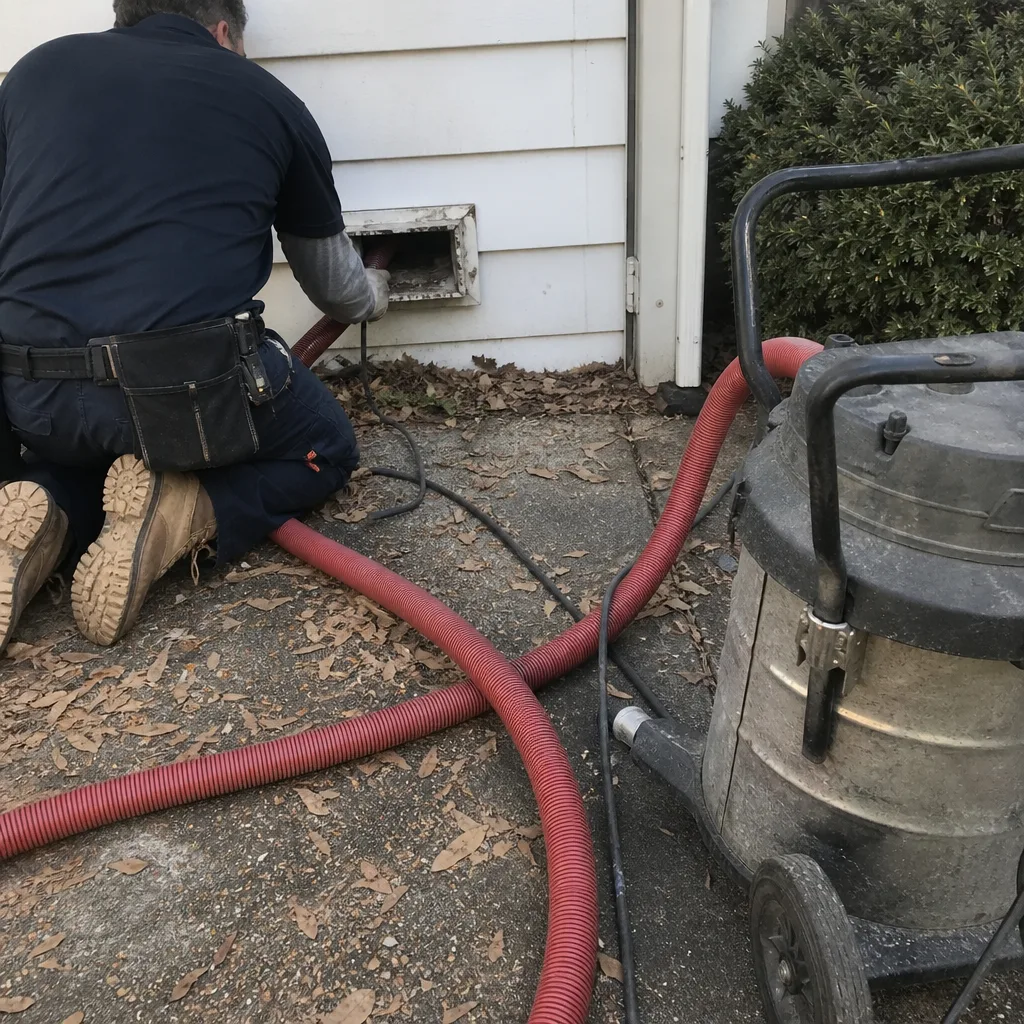 Before
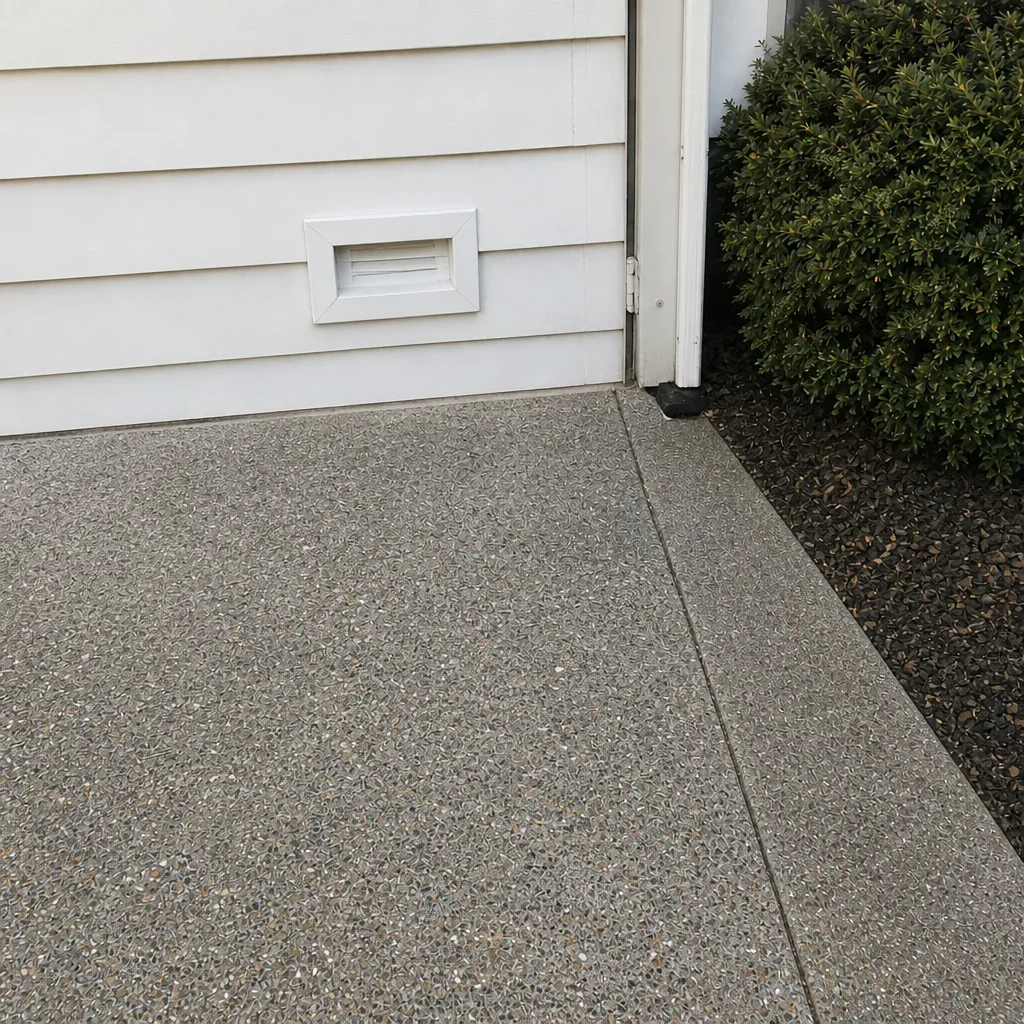 After
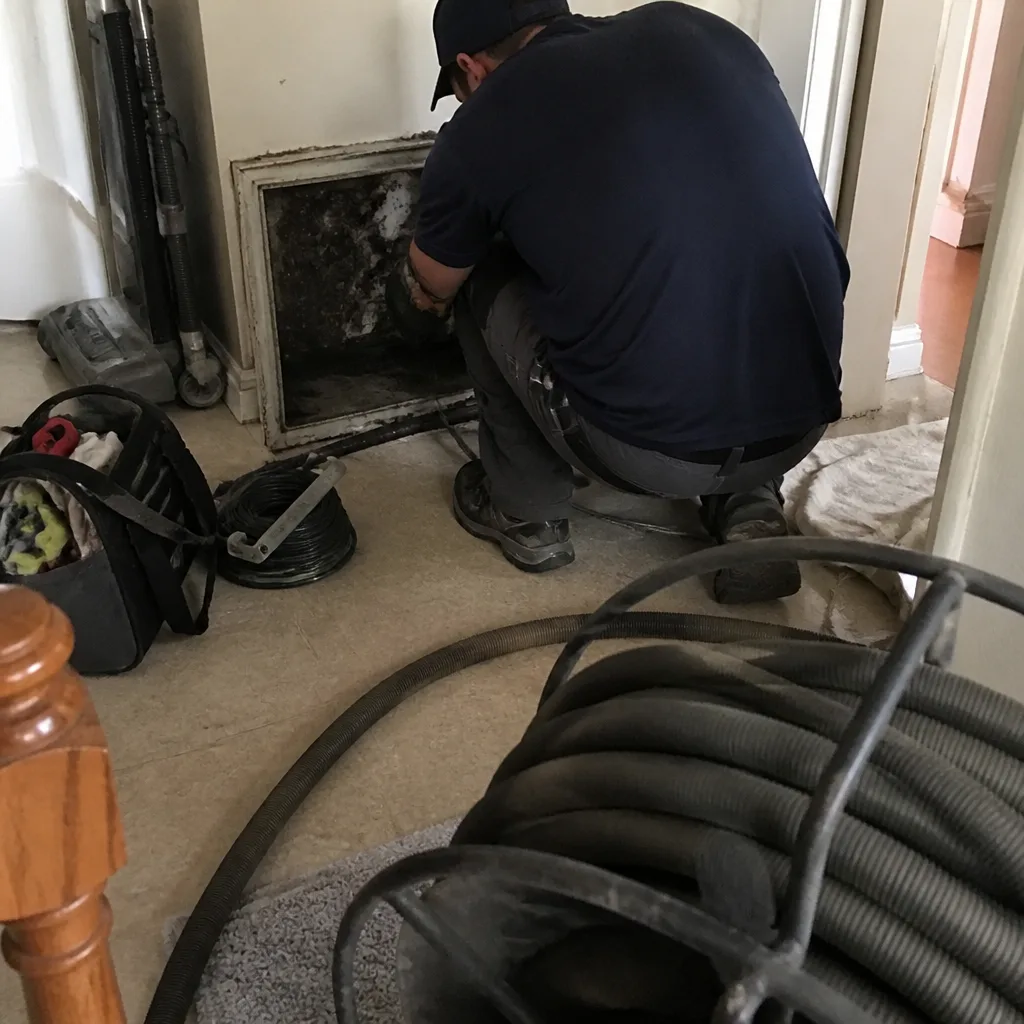 Before
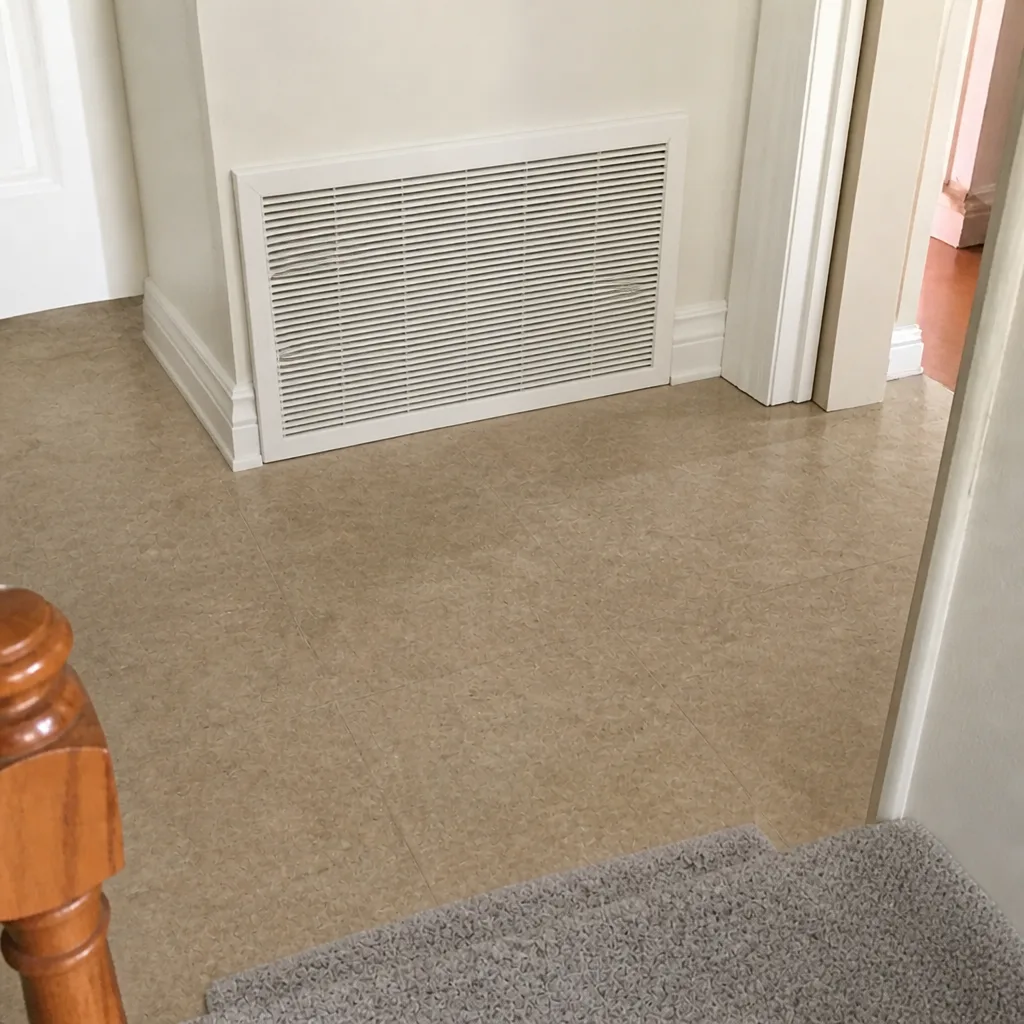 After
 Before
 After
Pre-Event Preparation: The Records That Speed Response
Emergency response is faster and cheaper when you already have system documentation on hand. A folder with the duct layout, component ages, and prior service records can save hours in the first 24 hours after a fire, flood, or system failure.
Here’s the minimum documentation to keep:
- Duct layout sketch or photo set. A rough hand sketch is fine. Mark the air handler, the main trunk, the branches, and the register locations. If your Midtown house has had an addition or a renovation, note where the new ductwork connects.
- Component inventory. Furnace and AC model numbers, air handler model, approximate install dates. Write it down or photograph the data plates.
- Prior service records. The date of the last air duct cleaning, the last HVAC service, and any filter replacements. A service history tells the response crew what they’re working with.
- Filter specifications. The size and MERV rating you’re running. If you’ve installed upgraded filtration, note it; that changes how the system should be cleaned and what replacement parts to have on hand.
- Contact list. Your HVAC contractor, your insurer, and the duct cleaning company you’d call. Emergency planning works better when the phone numbers are already written down.
- Rough square footage and register count. This helps any contractor give an accurate estimate over the phone and helps an adjuster understand the scope.
A dryer vent record belongs in the same folder, because vent fires are their own emergency and are frequently overlooked. Lint buildup in the dryer vent is a recognized fire cause, and it’s one of the few home air-pathway problems that’s fully preventable with dryer vent cleaning. If you’ve never had the vent inspected, add it to the same file and mark the date of the last cleaning.
There’s one more thing worth doing: know your system’s shutdown procedure. Where’s the breaker? Where’s the thermostat’s fan switch? Where’s the gas shutoff? If you can answer those three questions without thinking, you can start the emergency sequence in under a minute.
What a Professional Emergency Response Looks Like
A duct cleaning emergency response is a sequenced job: containment first, HEPA vacuum and rotary brush cleaning second, sanitizing third, and verification last. Each step has a specific purpose, and skipping any one of them is what makes a “cleaned” system come back contaminated.
The equipment is the honest tell. Consumer-grade vacuums and shop vacs don’t hold HEPA filtration under load, and they can’t reach the full length of a trunk line. Professional response uses a truck-mounted or high-capacity HEPA vacuum, and a rotary brush system that actually scrubs the duct interior. We run Rotobrush rotary brush systems and Nikro HEPA vacuum equipment on Midtown jobs for exactly this reason: they reach the liner, the seams, and the full run of flexible duct where soot and mold settle. The same tools used in commercial abatement are what give the cleaning a measurable outcome rather than a visual one.
The containment part matters for the same reason. On a post-fire job, air filtration equipment running under negative pressure keeps disturbed soot from spreading through the house during the work. That’s what Abatement Technologies equipment is built for. It’s a brand used in mold and contaminant abatement projects, and its purpose in a duct cleaning job is the same: keep the contamination in the work zone.
Then there’s the “we repair what we find” step. A duct system that’s been through a flood or fire often has damaged seams, crushed flex sections, or disconnected joints that let air (and contaminants) leak into the cavity. Cleaning around damage doesn’t fix it. Air duct cleaning is the entry point; duct repair and sealing is what actually restores system integrity. Our technicians have up to 13 years of experience, and a lot of that is spent diagnosing leaks and damage that get missed on a quick vacuum visit.
One last piece: what happens after the cleaning. Cleaning removes what’s there. It doesn’t prevent the next event. We install Honeywell and Aprilaire air quality products when the homeowner or property manager wants filtration that keeps working between service visits. That’s not a required step for the emergency response, but it’s the layer that helps protect the system long after the initial cleanup.
Common Mistakes to Avoid
- Restarting the HVAC before the system is inspected. Running the blower after a flood or fire is the single fastest way to distribute contamination through the whole house. Shut it down first, then call.
- Using a shop vac on contaminated ductwork. A consumer vacuum with no HEPA filtration pushes fine particles back into the room, and it can’t reach more than the first few feet of duct. It also risks spreading soot to other rooms.
- Waiting a week for the moisture assessment. In Midtown’s humid summers, the “let it dry” plan fails within 48 to 72 hours. The window closes faster than most homeowners expect.
- Cleaning the ducts but ignoring the air handler. The blower wheel and evaporator coil are part of the same air pathway. A clean duct network feeding a contaminated coil just recontaminates everything downstream.
- Skipping dryer vent inspection after water damage. A flooded basement or a wet crawl space doesn’t just affect the HVAC ducts, and the dryer vent is often right next to the damage. It’s also a fire-safety item most homeowners never check.
- Throwing out damaged duct or filters before photographing them. Adjusters ask for photos of discarded material. Once it’s in the dumpster, the claim gets harder to substantiate.
- Hiring on the lowest quote alone. A quote that’s dramatically lower than others is usually missing the containment, the HEPA equipment, or the repair-and-seal step. Read the scope, not just the number.
When to Call a Professional
Call a professional if any of these describe your situation: the system has run at all after a flood or fire; the air handler has been wet; there’s a musty smell near a register; soot staining appears on ductwork or vents; the HVAC system failed in humid weather and the condensate pan overflowed; or you’re filing an insurance claim and need a contractor report. These are the cases where cleaning is a sequenced job, not a maintenance visit, and where doing it wrong means doing it twice.
Air Duct Cleaning Midtown offers free estimates in Midtown. Call (844) 605-0607. We answer 24/7. Fast dispatch from 7am to 7pm, Sunday through Friday. If you’re mid-emergency and can’t wait for a scheduled visit, a call outside dispatch hours is booked into the next opening, Sunday through Friday, 7am to 7pm. Our entire air pathway service line covers air ducts, dryer vents, HVAC units, sanitizing, and duct repair and sealing. One call covers the whole system.
Frequently Asked Questions
Within 48 to 72 hours of water exposure, and the system should be shut down immediately, before that window. Mold can begin colonizing damp duct liner in that period. If the HVAC has run at all after the flood, treat the system as contaminated until a technician inspects it. Call (844) 605-0607 for a free estimate; we answer 24/7.
No. Running the HVAC fan after a fire pulls smoke and soot through the return side and redistributes it through every supply register. Air the house with open windows and box fans if it’s safe, but leave the HVAC system off until it’s been inspected and cleaned. Soot in the duct liner doesn’t air out; it has to be removed. Call (844) 605-0607 to schedule an inspection.
Smoke odor sits on duct surfaces and can be removed with HEPA vacuuming and sanitizing. Soot penetrates duct liner and flexible duct and often can’t be cleaned out; those sections typically need replacement. Cleaning the surface without addressing the liner leaves the source behind. A professional inspection tells you which one you have. Estimates are free at (844) 605-0607.
The air handler cabinet holds the evaporator coil and blower, and it’s where condensate collects when the drain line clogs. If the system keeps running while that cabinet is wet, moisture travels into the supply plenum and the nearest trunk duct. That’s where biological growth starts. The coil and cabinet need to be dry and inspected before restart. Call (844) 605-0607 to schedule a check.
Photograph every register, the air handler, visible ductwork, and any water line on affected surfaces. Take wide shots for context and close-ups for detail. Don’t throw out wet filters or damaged duct sections before photographing them, since adjusters frequently ask for that material. A contractor’s moisture readings and written scope then complete the file. Call (844) 605-0607 to get a written estimate and inspection report.
Yes. When the outdoor humidity is high and the system is off, a wet duct system takes longer to dry and stays above the drying threshold. In a Midtown summer, ducts in an attic or crawl space that got wet don’t dry passively; they stay damp long enough for growth to start. The 48-to-72 hour window is a hard line in that season. Call (844) 605-0607 to schedule a moisture assessment and cleaning.
The Bottom Line
The three things that matter in an air quality emergency are sequence, shut down first; inspection, before you run the system again; and documentation, before you throw anything away. The 48-to-72 hour moisture window is the part most Midtown homeowners miss, and it’s the difference between a cleaning and a repair. Post-fire, the key distinction is soot penetration versus surface smoke: they take different treatments and only an inspection tells you which you’re dealing with. Build the records now, know your shutoff points, and put one duct cleaning number in the file before you need it. Call (844) 605-0607 for a free estimate. We answer 24/7. Fast dispatch from 7am to 7pm, Sunday through Friday.
Written by the team at Air Duct Cleaning Midtown.