
Last updated November 25, 2026
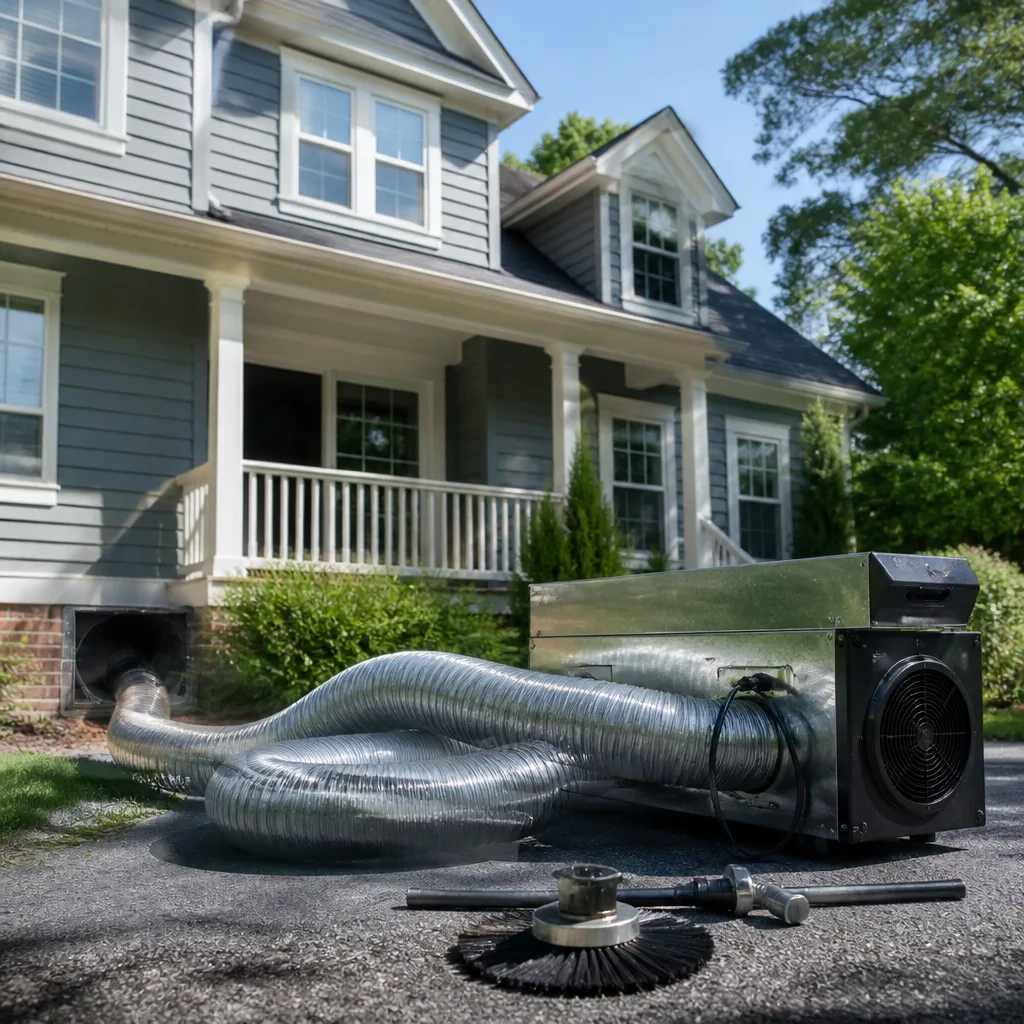 Whole-home duct cleaning
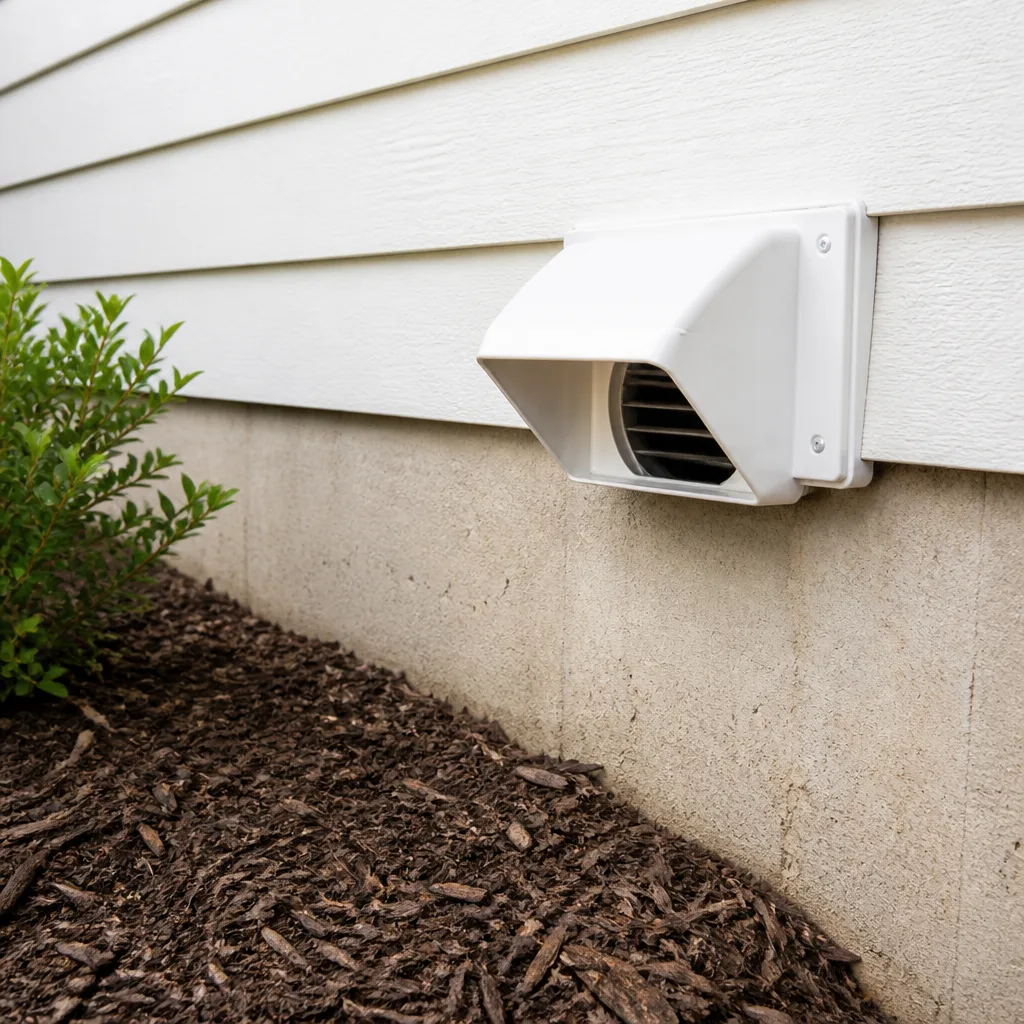 Dryer vent cleaning
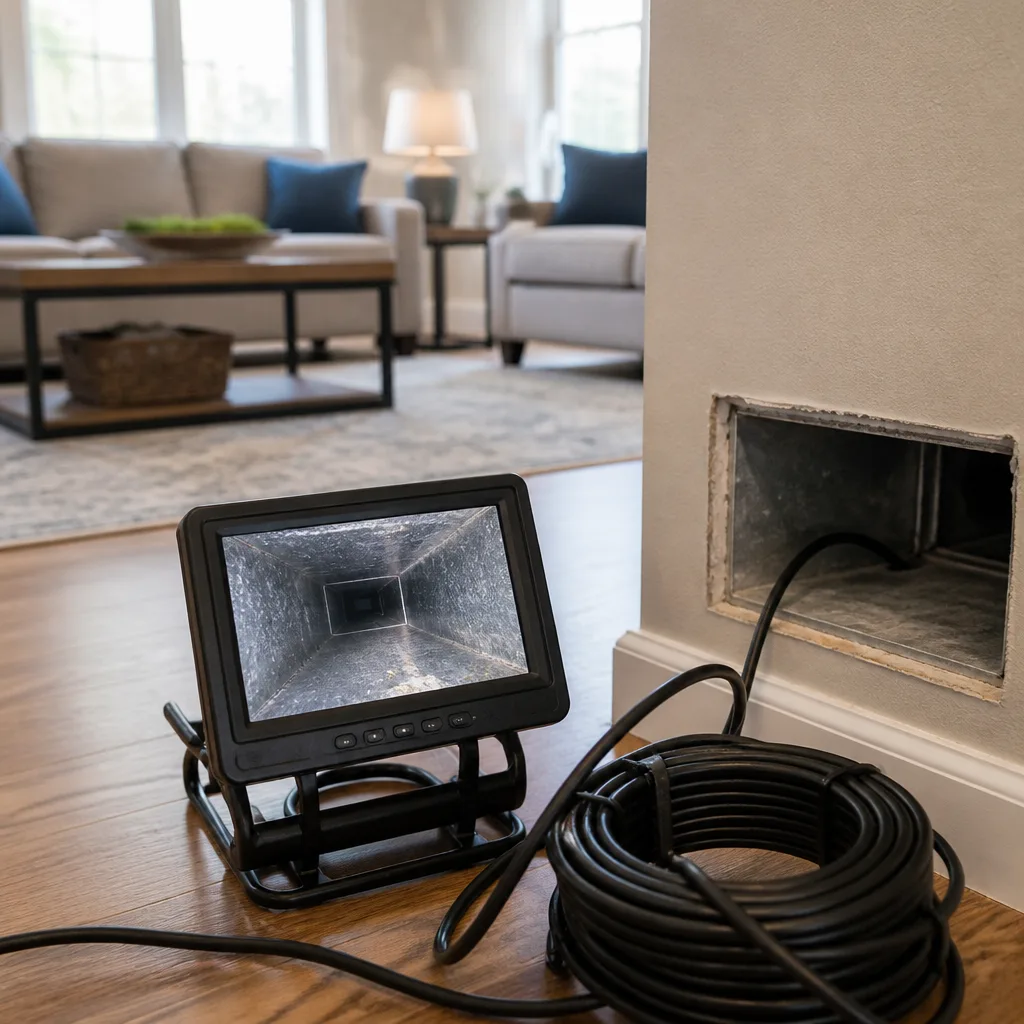 Camera inspection
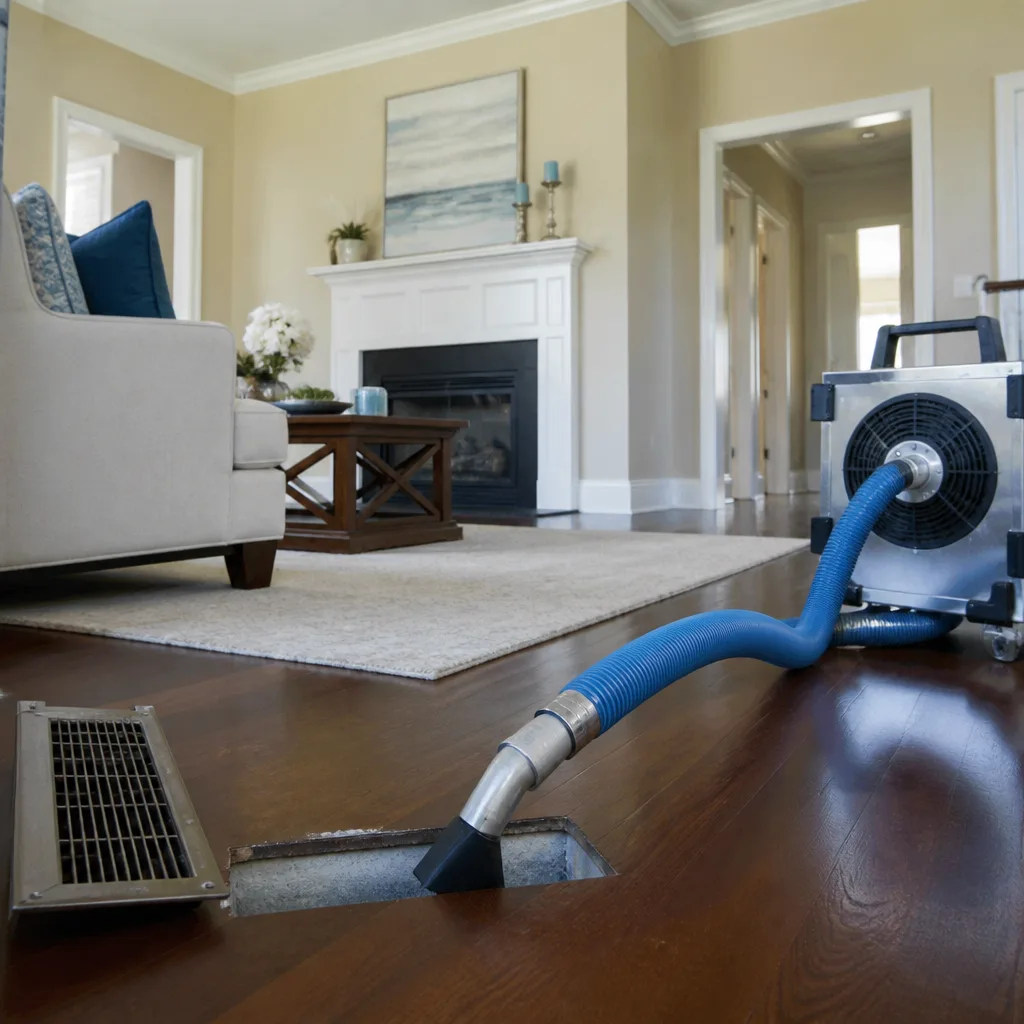 Sanitizing & deodorizing
Whole-system duct and dryer vent check with before-and-after photos - you see exactly what came out of your vents
That "$99 whole-house special" is a bait ad - the real number appears once they are in your hallway, or the "clean" is a shop-vac at the register. We photograph the inside of your ducts before and after instead.
Air Duct Cleaning Maintenance Checklist for Midtown Homeowners
Most homeowners treat duct care as a filter problem. Change the filter, and the system is fine, right? That’s the misconception worth clearing up first. A filter catches what reaches it, but the trunk lines, return plenums, and supply boots collect what the filter never sees, and they do it slowly enough that you won’t notice until an odor, a stuffy room, or a climbing allergy season forces the issue by which point the buildup has been there for months. What follows is a practical maintenance checklist built for Midtown homes: what to inspect monthly, quarterly, and annually, how to keep a simple log that catches contamination early, and where the line sits between what you can check yourself and what needs a professional camera and vacuum.
Quick Answer
A working air duct maintenance checklist for Midtown comes down to three habits: check and log your filters and registers every month, inspect the air handler and dryer vent every quarter, and book a full professional cleaning and inspection once a year (or sooner after a renovation, a musty smell, or a run of allergy symptoms). The log is the part most people skip, and it’s the part that tells you contamination is building before your nose does.
Styles & brands we work with
- Whole-home duct cleaning
- Dryer vent cleaning
- Camera inspection
- Sanitizing & deodorizing
Table of Contents
- Why a System-State Log Beats a Filter Reminder
- Monthly Tasks: Filters, Returns, and Supply Registers
- Quarterly Tasks: Air Handler, Dryer Vent, and Coils
- Annual Tasks: The Full Professional Cleaning
- Midtown Seasonal Triggers Through the Year
- How to Log Filter Condition and Early-Warning Signs
- What You Can Inspect vs. What Needs a Camera
- When a Checklist Finding Means Calling a Pro
Why a System-State Log Beats a Filter Reminder
A filter reminder tells you when to buy a filter. A system-state log tells you what your ducts are doing between cleanings, and those are different jobs. The ducts in a Midtown home sit behind drywall and above ceilings, so the only signals you get are indirect: how fast a filter loads up, how a register looks, whether a room feels stuffy when the system runs, whether a faint musty note shows up when the air first kicks on. Individually those signals are noise. Written down over months, they form a pattern, and the pattern is what tells you contamination is accumulating in the trunk lines before anyone can smell it.
We’ve seen this play out in homes across Midtown where a homeowner changed filters faithfully and still ended up with a musty return. The filter was doing its job at the filter. The contamination was downstream, in the plenum and the trunk, where nothing was watching. A log catches that drift. It also gives a technician something to work with when you do call, because you can point to the month filter loading doubled or the register that started showing fine gray dust instead of lint.
The other reason to log is that it separates a real problem from a normal one. A single dusty register isn’t a red flag. Three registers showing the same gray film within a month, right after a renovation or a pollen peak, is a different story. The log is what makes that distinction visible.
Monthly Tasks: Filters, Returns, and Supply Registers
Monthly checks take about ten minutes and cover the three points where problems show up first: the filter, the return grilles, and the supply registers. Do them on the same day each month so the entries are comparable. Nothing here requires tools beyond a flashlight and a phone camera.
- Pull and photograph the filter. Hold it up to a light and photograph it where it sits in the unit. The photo is the record: a filter that goes from light gray to opaque in one month is loading faster than it should.
- Note the filter loading in your log. Write the date, the filter type, and a simple one-to-five rating for how loaded it looks. If loading jumps from a two to a four within a month, that shift is the early-warning signal worth chasing.
- Look at the return grilles. Shine the light across the grille surface at a low angle. Dust sitting on the grille face is normal; a mat of dark lint pulled tight against the grille means air is moving through more resistance than it should.
- Check every supply register you can reach. Wipe a white cloth across the inside of the register and photograph the cloth. Fine gray or black residue is the kind of particulate that tells you something upstream is shedding.
- Listen at the return with the system on. A whistle or a hard whoosh you didn’t notice last month usually means restriction somewhere in the return path, not a failing blower.
If your home has rooms that are always closed off, check those registers too. A shut register in a Midtown bedroom that rarely gets used is one of the easiest places for dust to settle and go unnoticed for a year.
Quarterly Tasks: Air Handler, Dryer Vent, and Coils
Quarterly checks go one layer deeper: the air handler cabinet, the evaporator coil if it’s visible, and the dryer vent. These are inspections, not repairs. If something looks wrong, log it and call rather than opening panels or pulling parts, because the air handler cabinet sits next to live electrical connections and a sealed cabinet is sealed for a reason.
- Look at the air handler cabinet for streaks. Rust streaks, water staining, or a musty smell with the panel on but the system off point to moisture where it shouldn’t be, and moisture is what turns ordinary dust into a bio-growth problem.
- Check the condensate drain line. If you see standing water in the drain pan, log it. A slow drain can raise humidity in the cabinet and soften dust into a film that clings to the coil.
- Peek at the evaporator coil if the cabinet has an access port. A light dusting is normal. A matted, gray-brown blanket across the fins is restricted airflow, and it will cost you efficiency until someone cleans it.
- Inspect the dryer vent run. Pull the dryer out enough to reach the vent connection. Check for lint buildup at the transition, kinks in the flexible duct, and lint visible at the exterior termination. Lint in the vent is a fire-safety issue, not a housekeeping one.
- Photograph and log everything. Same system, same day each quarter, so the photos line up.
Dryer vent care deserves its own line on the checklist because it’s the task most general duct cleaners skip and the one with the clearest safety stakes. Our dryer vent cleaning work exists for exactly this reason: a vent is a fire pathway, and it needs the same professional attention as the supply side of the system.
Annual Tasks: The Full Professional Cleaning
Once a year, the checklist should include a full professional cleaning and inspection of the whole air pathway, not just the duct runs. That means the trunk lines, the plenum at the air handler, the supply and return branches, and the register boots, done with equipment that can reach surfaces a shop-vac can’t and contain what it loosens. This is where a real cleaning differs from a surface pass, and it’s where the annual professional visit earns its place on the list.
What we look for during an annual visit in Midtown is the stuff a homeowner can’t see from a register. A rotary brush system like the Rotobrush line scrubs the duct walls and pulls material into a HEPA vacuum, and a Nikro HEPA unit filters the exhaust so fine particulate doesn’t get pushed back into the room. During a full abatement-grade cleaning, we run Abatement Technologies containment equipment so dust, mold spores, and contaminant material stay captured instead of settling back onto your furniture. That containment mindset is borrowed from commercial restoration work, and it’s the difference between cleaning a duct and cleaning a room.
If the annual inspection turns up damaged or disconnected ductwork, cleaning alone won’t hold, because a leak lets conditioned air escape and unfiltered attic or crawlspace air get pulled in. That’s why we keep a Duct Repair & Sealing service alongside cleaning: we repair what we find rather than cleaning around it and leaving the leak in place. An annual cleaning is the moment to catch those leaks, not a separate appointment down the road.
Midtown Seasonal Triggers Through the Year
Midtown’s climate loads the system in predictable waves, and a good checklist is tuned to them. Three seasonal triggers matter most, and each one has a specific task attached.
Spring: Pollen Load
Spring pollen in Midtown pushes the return side hard. Fine pollen rides in on the outdoor air and packs into filter media faster than the standard filter-change interval suggests. Check the filter every few weeks during the peak instead of once a month, and note when the return grilles start showing fine yellow-gray dust. If the log shows a jump in loading during the same weeks every spring, that’s your baseline for the year.
Summer: Condensation on Supply Boots
Midtown summers are humid, and a cold supply boot in a humid attic or closed cavity is where condensation shows up first. Sweating on the metal boot or a damp patch near a ceiling register is a sign the boot or its insulation has a problem. Log it and call, because persistent condensation at the boot is how moisture gets into the duct insulation and stays there.
Fall: Debris at Exterior Intakes
As leaves and seed debris build up around exterior air intakes and the outdoor portion of the system, the intake side gets restricted. Clear visible debris from around any exterior intake grille and check whether the return airflow sounds the same as it did in summer. A change in sound is the checklist telling you something’s blocking the path.
Winter is the quiet season for this checklist: keep the monthly filter and register checks going, but the big seasonal triggers are spring, summer, and fall. The value of tracking them is that you learn your home’s own rhythm, and the next year you know exactly when to look harder.
How to Log Filter Condition and Early-Warning Signs
The log itself doesn’t need to be complicated. A cheap notebook or a note on your phone with dated entries is plenty. What matters is that every entry uses the same fields so you can compare months side by side. Use these:
- Date of the check.
- Filter rating (one to five for visible loading) plus a photo.
- Register observations: which registers showed residue, what color, how heavy.
- Airflow notes in plain words: strong, soft, whistling at the return.
- Odor notes: none, faint musty, sharp; and whether it shows up when the system starts.
- Moisture notes: condensation at boots, water in the drain pan, damp insulation.
Static pressure is the number that would tell you most, but a homeowner can’t measure it without a manometer and a tap at the correct point, so leave that to the technician. What you can capture is the observable proxy: how fast the filter loads, how the airflow sounds, what shows at the registers. When a technician does arrive, those notes let the inspection start with real evidence instead of a guess. A professional who runs a Nikro HEPA unit and checks pressure across the system can pinpoint restriction in a way a notebook can’t, but the notebook tells them where to look first.
Patience matters here. A single odd entry is not a finding. Two or three related entries across a season, though, mean the system is telling you something, and a professional visit should go on the calendar before the next seasonal change.
What You Can Inspect vs. What Needs a Camera
The line between homeowner inspection and professional inspection is a simple one: you can see what’s visible from a register, and you can’t see inside the trunk line or measure how much the system is starving for air. Here’s how that breaks down by component.
- What a homeowner can check: filter loading, return and supply register surfaces, visible moisture at boots and the drain pan, the dryer vent transition for lint, and exterior intake debris.
- What needs a camera: the inside of the trunk and branch runs, the plenum above the air handler, and any ductwork in a closed cavity or above a finished ceiling. A camera inspection shows the actual condition of the duct wall and any disconnection or rodent intrusion.
- What needs a negative pressure test and a manometer: whether the system is pulling unfiltered air from a leak, and where the restriction is. That’s how a professional quantifies duct leakage and confirms the cleaning actually improved airflow.
- What needs a professional vacuum: anything that loosens heavy material from a duct wall. A consumer-grade vacuum can’t contain what a professional HEPA unit like a Nikro picks up, and containment is what keeps the dust out of your room.
For the annual cleaning, a real professional pass uses a rotary brush system like Rotobrush to agitate the duct wall and a HEPA vacuum to capture the dislodged material under containment. That’s the technical reason a professional visit belongs on the checklist rather than a stronger DIY vacuum. If the annual inspection finds damage, the fix is a designed repair, and that’s where our air duct cleaning work crosses into our Duct Repair & Sealing service. If the air handler and coil need attention, our HVAC cleaning service covers that side, so the whole pathway gets looked at together rather than in pieces.
When a Checklist Finding Means Calling a Pro
A checklist is only as useful as the rules you set for acting on it. Some findings are normal noise; others mean stop and call. Here’s the short list of triggers we’d treat as a call-worthy:
- Filter loading doubles for two months running with no filter-type change.
- Three or more registers show the same gray or black residue within one month.
- A musty odor appears when the system starts, even faintly.
- Condensation persists at a supply boot or dampness shows in the drain pan.
- The return airflow sounds different from last quarter with no change to the filter.
- Lint visible at the dryer vent transition or exterior termination.
- Any visible damage to ductwork: a disconnected joint, crushed run, or rodent intrusion.
- Allergy or asthma symptoms in the home that get worse when the HVAC runs.
If any of those show up, the next step is a professional inspection and a photo record of your ducts before and after cleaning. Air Duct Cleaning Midtown offers free estimates in Midtown. Call (844) 605-0607. We answer 24/7. Fast dispatch from 7am to 7pm, Sunday through Friday.
Common Mistakes to Avoid
- Changing filters religiously but never checking the ducts. The filter is only part of the air pathway; a clean filter upstream doesn’t tell you what’s in the plenum below it.
- Skipping the dryer vent because it isn’t “part of the HVAC.” It’s a fire-safety path and it’s the most overlooked task on the checklist in Midtown homes.
- Wiping a dusty register and calling it done. The register face is a signal, not the source. Cleaning the grille tells you nothing about the duct behind it.
- Trusting a coupon price to be the whole job. A per-vent teaser can become a much larger invoice, and a checklist entry is a better reason to request a written estimate than a coupon is. It should be one flat price for the system, agreed before work starts.
- Letting a condensation finding slide through a Midtown summer. Sweating at a supply boot is a moisture problem behind the duct wall, and waiting until fall means it has had a whole season to spread into the insulation.
- Assuming the annual cleaning was done if the truck showed up. Ask for before-and-after photos of your own ducts, because the work should be visible, not just asserted.
- Removing or loosening an air handler panel to “take a look.” That cabinet is next to live electrical connections; an inspection by eye from the outside is all a homeowner should do.
See the difference
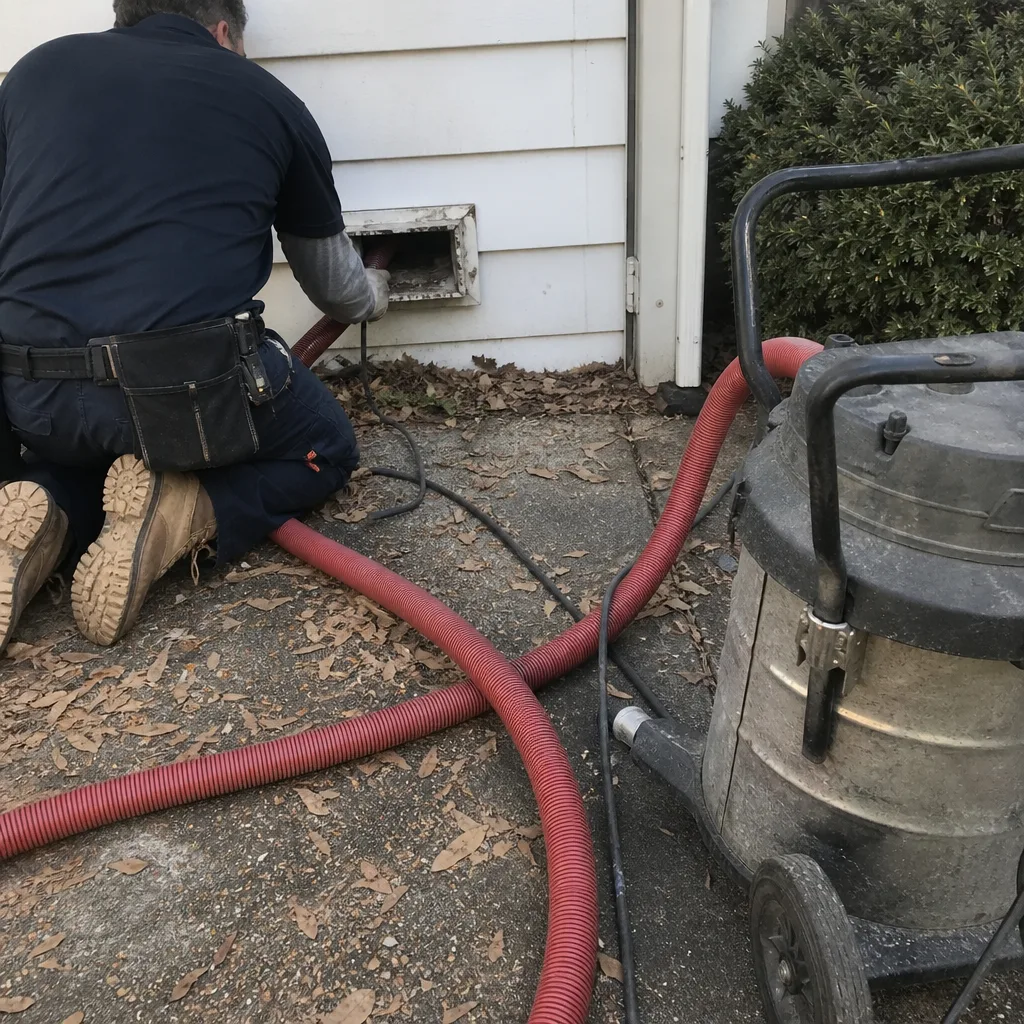 Before
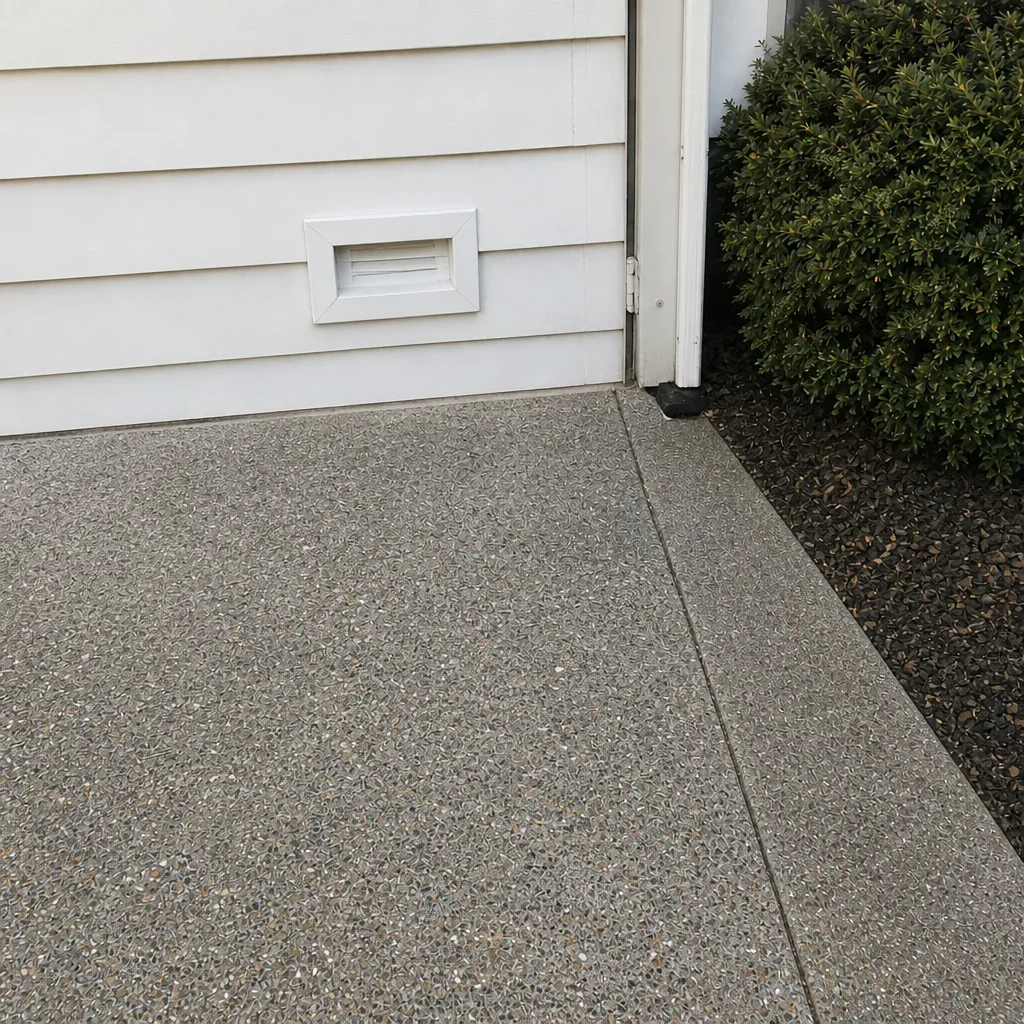 After
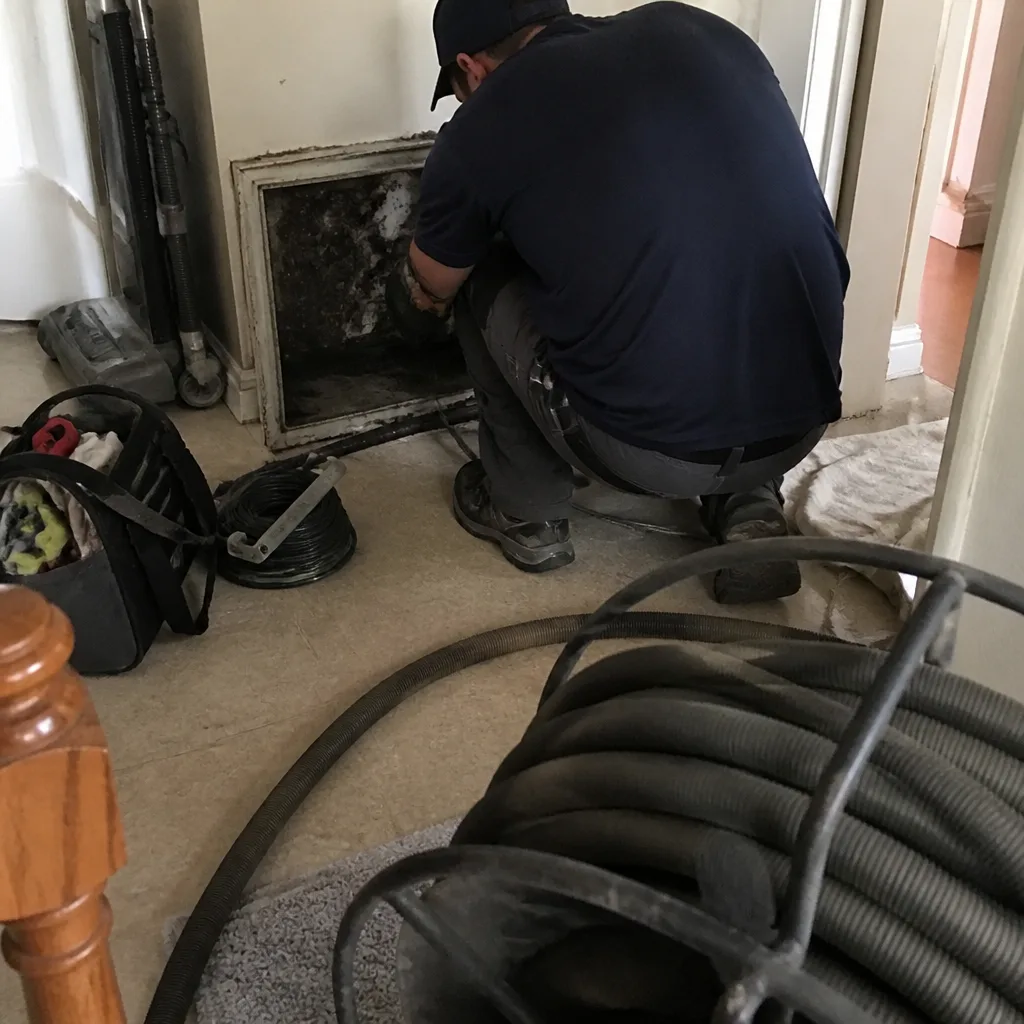 Before
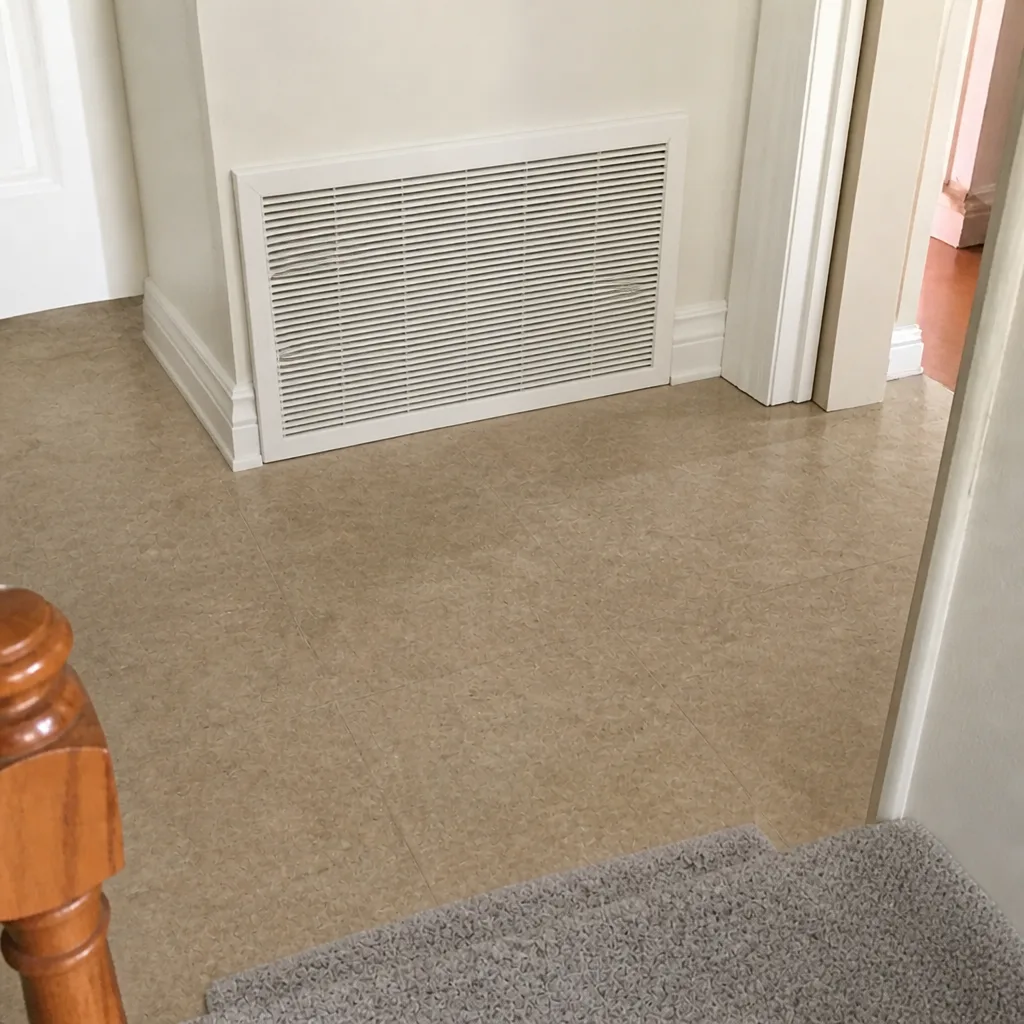 After
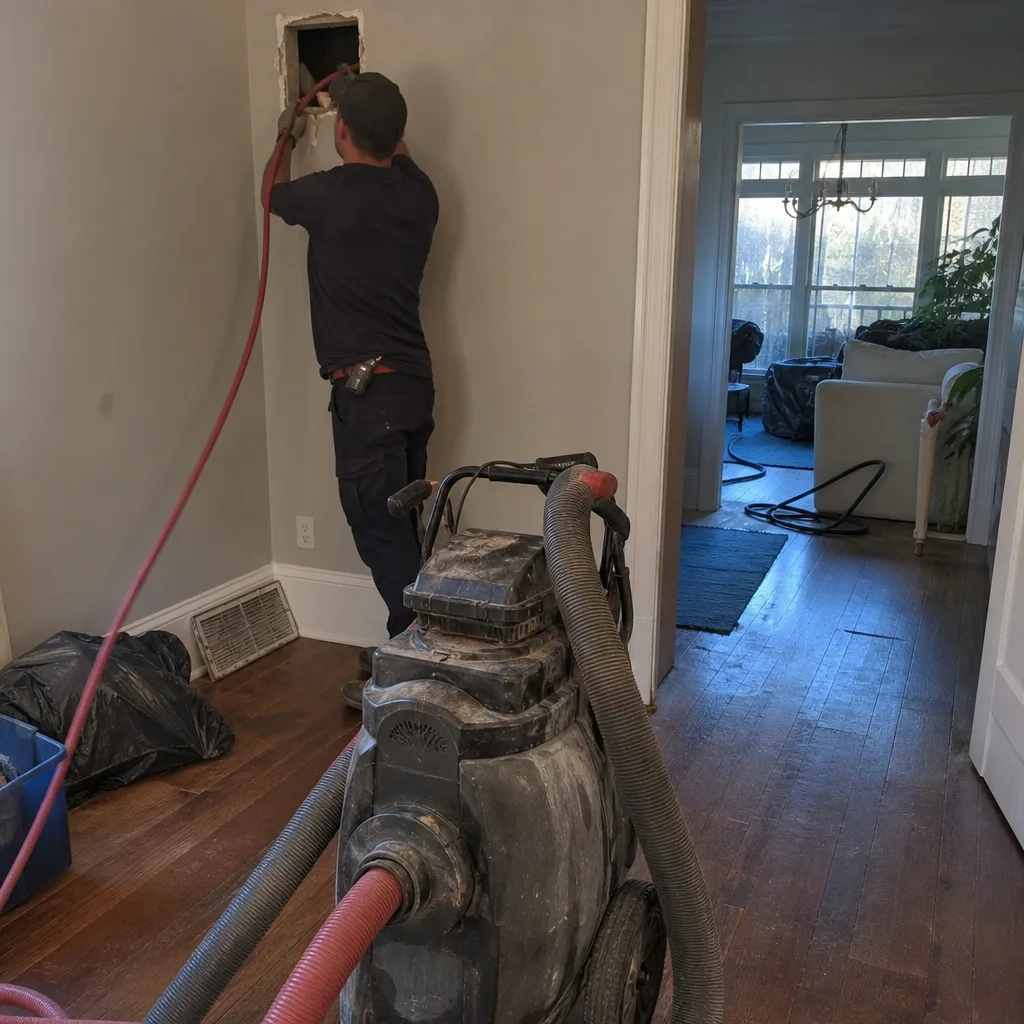 Before
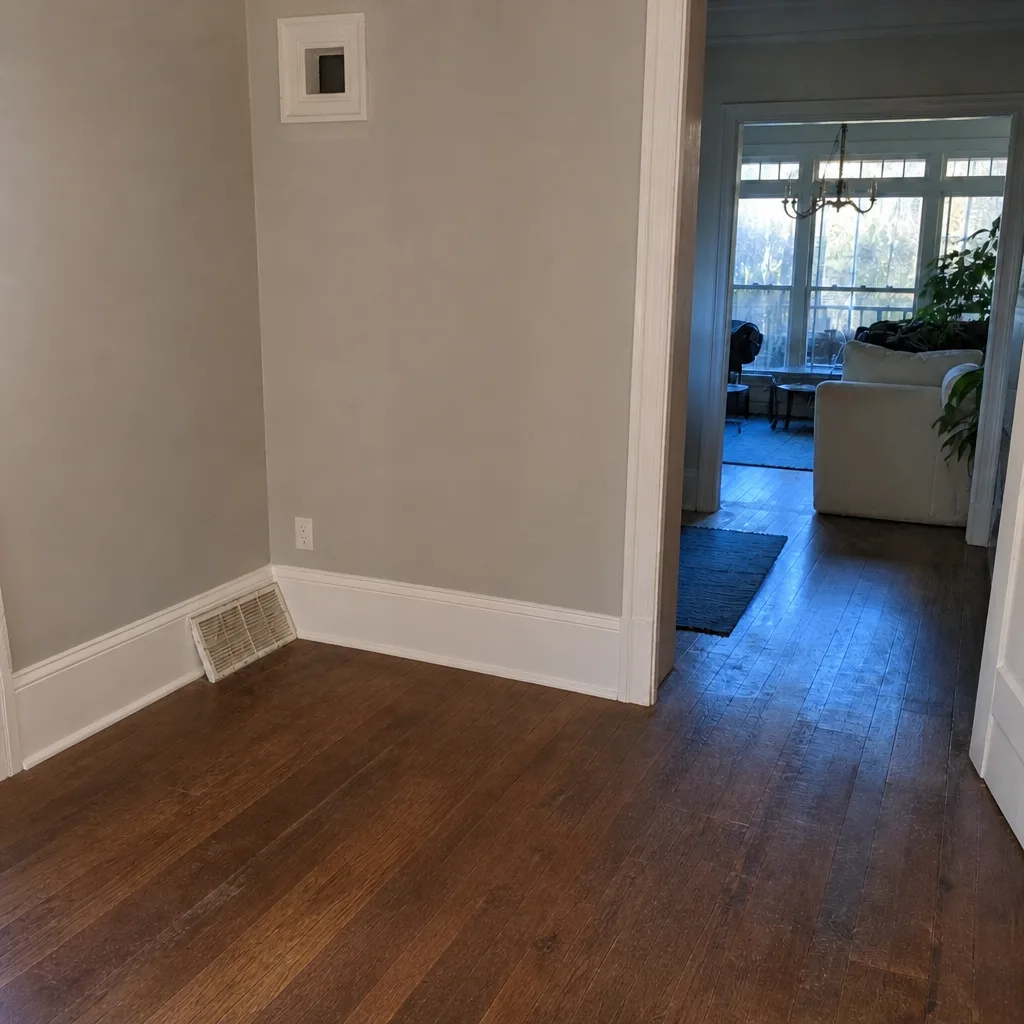 After
When to Call a Professional
Call a professional when a checklist finding points at something you can’t see or can’t test. If your filter load is climbing faster than usual, returns or registers show residue beyond a normal dusting, a musty odor shows up with the system, the dryer vent has lint at the transition, or a Midtown summer puts condensation on a supply boot, those are the moments where a camera inspection and negative pressure test will tell you what the notebook can’t. The same goes for damage: a disconnected joint or a crushed duct run needs repair and sealing, not another round of vacuuming. Air Duct Cleaning Midtown offers free estimates in Midtown. Call (844) 605-0607. We answer 24/7. Fast dispatch from 7am to 7pm, Sunday through Friday.
Frequently Asked Questions
Most Midtown homes do well with a professional full-system cleaning once a year, with your own monthly filter and register checks in between. Homes near a big renovation, a household with allergies, or a home with pets may benefit from a sooner visit if the checklist shows a clear pattern. Call (844) 605-0607 for an exact quote; estimates are free.
Monthly: filter loading, return and supply register surfaces, air flow sound, and any odor when the system starts. Annually: the full professional cleaning and inspection of the trunk lines, plenum, coils, and dryer vent. The monthly checks feed the annual visit by telling the technician where to look first. Call (844) 605-0607 for an exact quote; estimates are free.
You can buy a small camera, but a homeowner camera rarely reaches the trunk line or the plenum above the air handler, and it can’t measure airflow or duct leakage. A professional inspection uses a camera plus a negative pressure test, so the result is a condition report, not just a look. Call (844) 605-0607 for an exact quote; estimates are free.
Pricing in Midtown is set per job by a written estimate once a technician has seen your system, so we don’t quote a per-vent number that turns into a bigger invoice later. The written estimate is the final price, and it’s agreed before any work starts. Call (844) 605-0607 for an exact quote; estimates are free.
A very low price usually buys a surface pass with consumer-grade equipment, not a full cleaning under containment. Professional work with a rotary brush and a HEPA vacuum takes time and equipment, and the price reflects that. Call (844) 605-0607 for an exact quote; estimates are free.
Ask for before-and-after photos of your own ducts. A professional visit should show you the condition before and after cleaning, plus the containment setup used during the job. Call (844) 605-0607 for an exact quote; estimates are free.
The Bottom Line
A maintenance checklist for a Midtown home is a record of the conditions between professional cleanings, not a reminder to buy filters. Check the filter, returns, and registers monthly, log the observations on a consistent sheet, inspect the air handler, coils, and dryer vent quarterly, and book the annual full cleaning with a photo report at the end. Watch the Midtown seasonal triggers: spring pollen loading the return, summer condensation on supply boots, and fall debris at exterior intakes. When a finding repeats, call a pro. That’s the whole system working for you, rather than you guessing at it.
Air Duct Cleaning Midtown covers the entire air pathway: cleaning, dryer vent work, HVAC cleaning, air quality and sanitizing, and duct repair and sealing, using professional equipment from Rotobrush, Nikro, and Abatement Technologies, plus Guardsman products where they fit. Our technicians have up to 13 years of experience. Call (844) 605-0607 for a free estimate. We answer 24/7. Fast dispatch from 7am to 7pm, Sunday through Friday. Visit Air Duct Cleaning Midtown to see the full scope of what we do.
Written by the team at Air Duct Cleaning Midtown.